
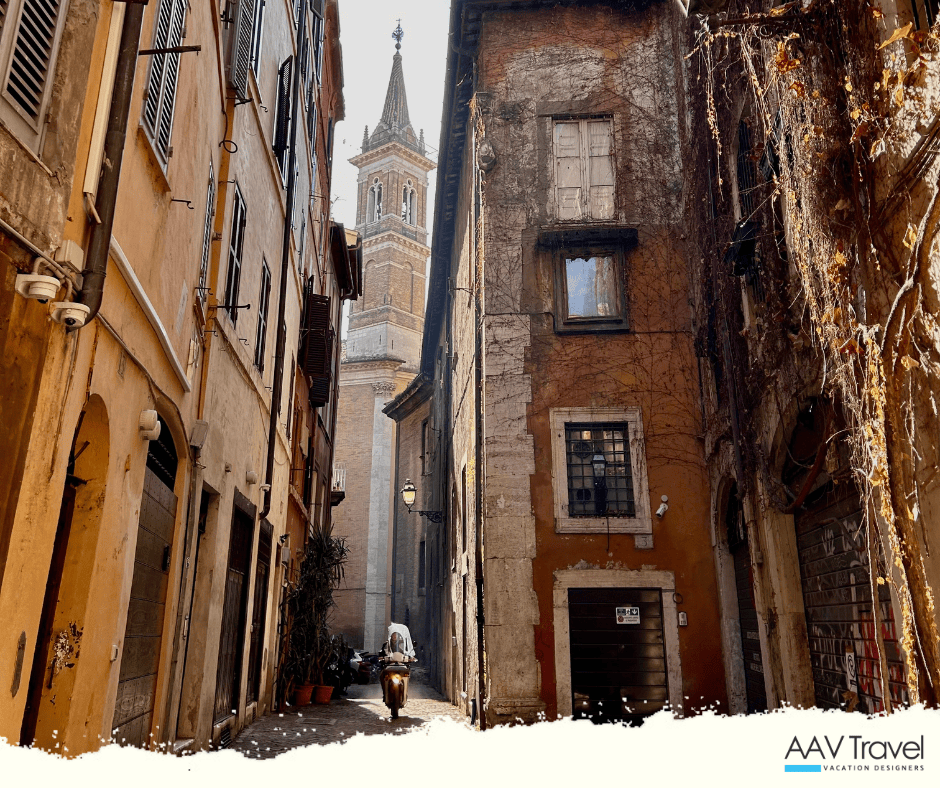
Many trips are now visually underway long before departure. Months ahead of the flight, we may already have seen the streets we will walk, saved the restaurants we intend to try, and watched other people stand at the viewpoint we hope to reach in time for the evening light. The place arrives in pieces, assembled by strangers, before we ever do.
There is real pleasure in that anticipation, and no reason to give it up. But familiarity of this kind is partial. By the time we land, we may feel we already know a destination. What we actually know is how it has been presented to us. The difference tends to become clear within the first hour on the ground, when the famous lane turns out to contain a hardware store, a woman waiting for a bus, and a delivery van parked across the exact angle visitors come to photograph.
The van is a useful correction. The place has been busy living its own life all along.
The street has a Tuesday
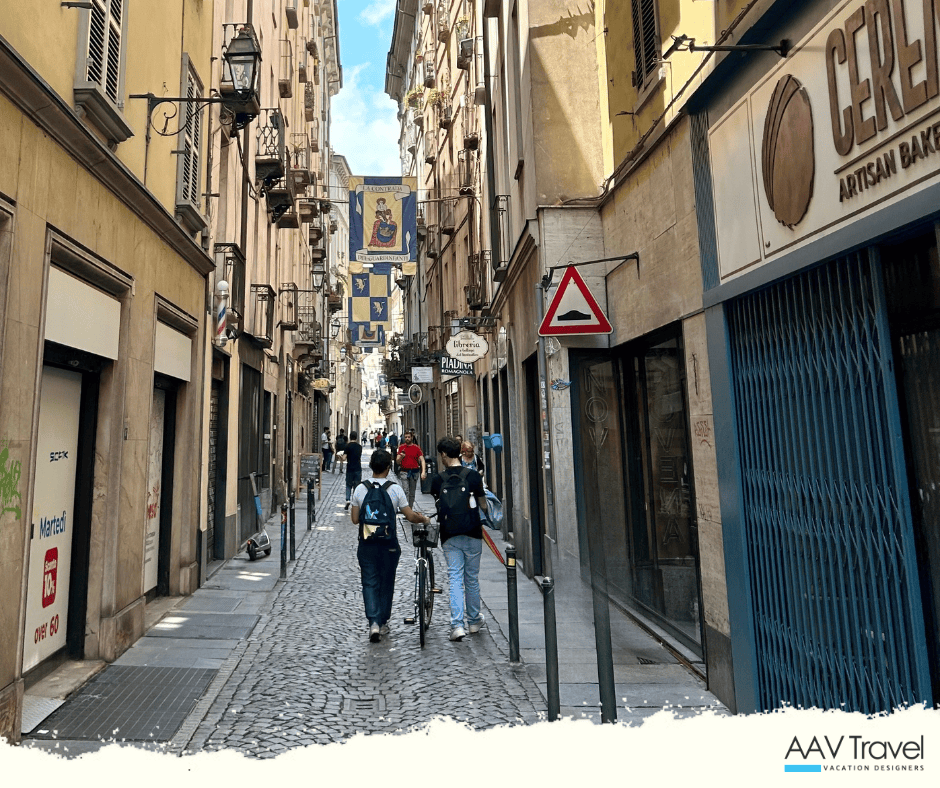
Every destination, however photographed, runs on ordinary rhythms that have nothing to do with visitors. The lane through the old town is also someone’s route to work. The blue door that appears in thousands of photos belongs to a family who opens it to carry in groceries. The market operates for the people who cook from it, and it ran the same way last Tuesday, when nobody was there to admire it.
None of this is hidden. It is simply easy to miss, because travel trains a particular way of seeing. We arrive attuned to whatever has been presented as remarkable, while ordinary life rarely announces itself. Yet the moment the ordinary comes into view, the destination changes character. Scenery becomes a neighborhood. And a neighborhood asks something slightly different of a guest than scenery does.
I have heard this shift in the way clients talk about a destination. It might be the realization that the fishing boats in the harbor go out at four in the morning whether or not anyone photographs them at sunset. Something ordinary comes into view, and the trip deepens. People rarely plan for that moment, but they remember it longer than most of what they did plan.
What a visit sets in motion

A visit creates a relationship, whether or not anyone acknowledges it. Where we stay, when we come, whom we hire, where our money settles, what we photograph: each of these touches the daily life unfolding around us, usually in small ways, occasionally in large ones.
Some of these effects are easy to picture. Where a traveler stays affects how much of the trip’s value remains nearby, although the accounting is rarely simple. Local ownership can matter, but so can wages, sourcing, staff retention, and long-term investment in the community. A smaller name is not automatically the more thoughtful choice.
Timing works the same way. Arriving during the few weeks when a place is under its greatest pressure affects residents, and it often affects the traveler too. When the experience does not depend on a particular season or event, shifting a trip by several weeks can change what residents absorb and what the visitor receives.
Other effects are quieter. A camera raised toward a person, a ceremony, or a child should be understood as a request, not an automatic right, and a genuine request leaves room for refusal. A house can be beautiful and still be private. A religious site may deserve more than compliance with the sign at the entrance; the sign describes the minimum. The fuller version of respect may require watching carefully, asking when appropriate, and accepting that not every part of a place is ours to experience.
Then there is the matter of discovery. Sharing a quiet place widely can help local businesses, but it can also accelerate the process that removes the quiet. Not every beautiful discovery needs to be broadcast immediately or presented as the next place everyone should go.
What tourism gives
None of this means a visitor is necessarily an intrusion. In much of the world, travel helps fund restoration, supports crafts and culinary traditions, and provides livelihoods across generations. The welcome travelers receive is often genuine. People can be deeply proud of where they live and glad to share it.
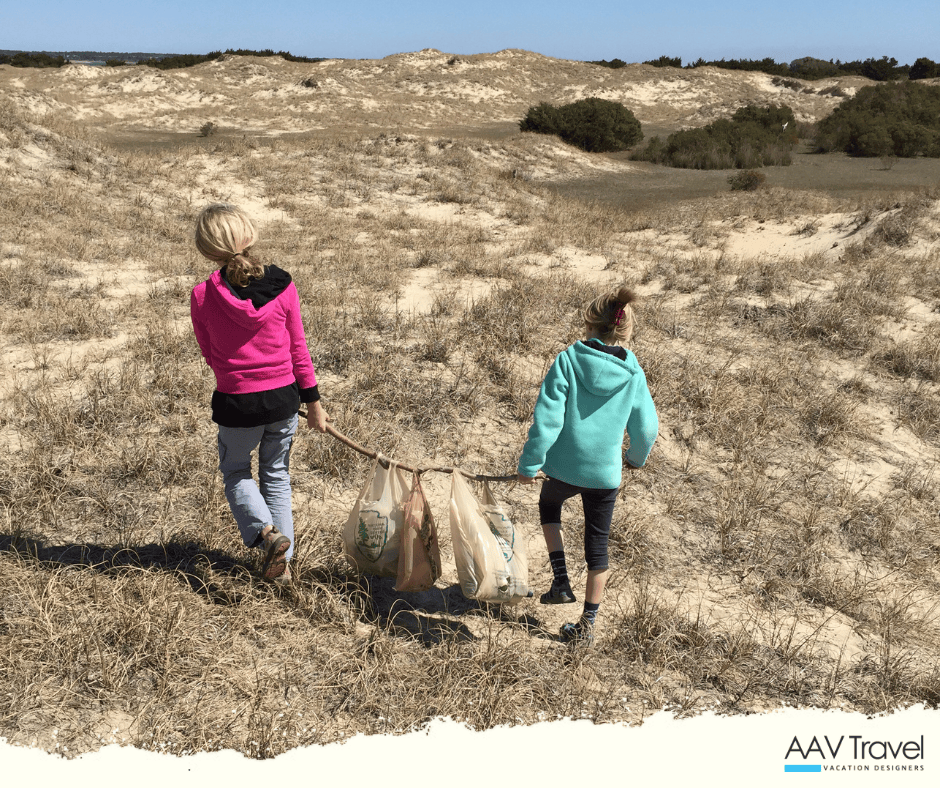
And no trip is free of consequence. Every visit uses water, produces waste, and adds another person to streets and sites already shared by others. Pretending otherwise leads either to guilt or to denial, and both make people worse travelers. In wild places, we are taught to leave no trace. In inhabited places, that standard makes little sense, because we will leave something behind no matter what we do. The better question is what. Money that circulated nearby, curiosity tempered by respect, and a more generous understanding carried home: those are worthwhile traces to leave.
Luxury does not change the underlying question. A traveler can stay somewhere exceptional, eat superbly, and be driven everywhere while still supporting local employment, expertise, and enterprise, and moving through the destination with attention. Comfort and consideration can sit together, though they do not always. A resort can strain water, land, or housing. Convenience can be chosen at a real cost to the place. Scale and attention matter within luxury as much as outside it.
Awareness before perfection
Mindful travel begins well short of perfection. It begins when a traveler recognizes that being received somewhere creates a relationship, and allows that recognition to inform the decisions that follow. Once we understand that a destination is lived in rather than staged for us, many choices begin to look different.
That awareness arrives through many channels. Sometimes it comes from staying long enough to recognize the same shopkeeper twice. Sometimes it is a conversation with the hotelier who grew up two streets away, or time with a guide who knows which family runs the taverna and why the town empties on Thursday afternoons. Any of these can allow us to encounter the destination as what it always was: a place where particular people live particular lives, briefly shared with a visitor.
The places we visit stay with us for years afterward. A trip that lasted ten days can surface in conversation for a decade. The exchange runs both ways. For a brief period, we become part of a place’s life too, and we have some say in the part we play.
By: Stefanie P.