Why Understanding a Destination’s Rhythm Matters More Than Its Season

On Tetiaroa, a small atoll 33 miles north of Tahiti, there is a moment each year when the Pleiades sink below the horizon and do not return for months. The Tahitians call this period Matari’i i Raro. It is the beginning of the cooler, drier season, and for centuries it has carried a specific cultural weight: a time of scarcity and frugality, when communities slowed down and turned inward before abundance returned.

The atoll quiets during these months. The surrounding water grows calmer. Humpback whales begin arriving from Antarctic waters, traveling north into the warmer shallows around French Polynesia to give birth and nurse their young. On clear nights, with nothing competing, the sky over Tetiaroa is staggering in a way that other seasons, with their cloud cover and humidity, do not quite match. Stargazing belongs to these weeks. So do traditions of oral storytelling and cultural transmission, practices tied to the cooler months when communities turned inward and shared what they carried. The ‘ava ceremony, a ritual with deep roots in Polynesian life that was nearly lost during the missionary period, has been carefully revived and remains part of the seasonal celebrations that mark these transitions.

None of this appears in a climate chart. A traveler researching Tetiaroa for these months would find comfortable temperatures, lower humidity, and less rain. All accurate. All incomplete. The data describes conditions. It says nothing about what the place is actually doing.

Every destination operates on its own calendar, shaped by agriculture, light, migration, spirituality, or tradition. These rhythms determine what a place is doing during any given week, and they can change the character of a visit entirely. Most travelers never encounter them because the usual planning questions, where to go, when the weather is best, how to avoid the crowds, do not surface them. They sit beneath the logistics, invisible until someone who knows the place well enough makes them visible.

The travelers most drawn to Tetiaroa during Matari’i i Raro tend to share something. Their professional lives move fast and leave little room for stillness. Many spend their days moving from one obligation to the next, measuring success through productivity and pace. Even their vacations often carry that same momentum: ambitious itineraries and the instinct to fill every available hour. Part of the appeal of a place like Tetiaroa during these months is that it operates according to a different rhythm altogether. The season invites you to notice more. To sit outside after dinner and watch the Southern Cross move across a sky that has no competition from anything on the ground. To let a conversation with someone from the atoll stretch past its useful point and into something personal. For travelers who have spent decades in motion, that kind of permission can be hard to give themselves. A destination that builds it into its culture makes it easier to accept.

In the Douro Valley of northern Portugal, the grape harvest in September and October changes the region completely. The terraced hillsides that look serene and photographic in June become working landscapes, full of activity and the smell of crushed fruit and the particular energy of a community focused on a single purpose. Producers open their quintas to visitors willing to get close to the process. You sit on a stone terrace at dusk while the day’s picking winds down below, the valley filling with the smell of warm earth, and someone hands you a glass of wine that has not finished becoming itself. The conversation is unhurried. The winemaker’s shoes are still dusty from the vineyard rows. The light over the terraces turns amber and then blue. This is a different thing from the polished tasting room visit available in spring, when the Douro is quiet and beautiful and the vines have not yet begun their work.

Many experienced travelers eventually notice that their most memorable trips share a quality. The weather may not have been ideal. The destination may not have been at its most famous. What made the trip was a feeling of having arrived when the place was doing something true to its own character, something honest and unrehearsed. That feeling is hard to plan for through conventional research, because it depends on knowledge that climate data and crowd calendars do not contain.
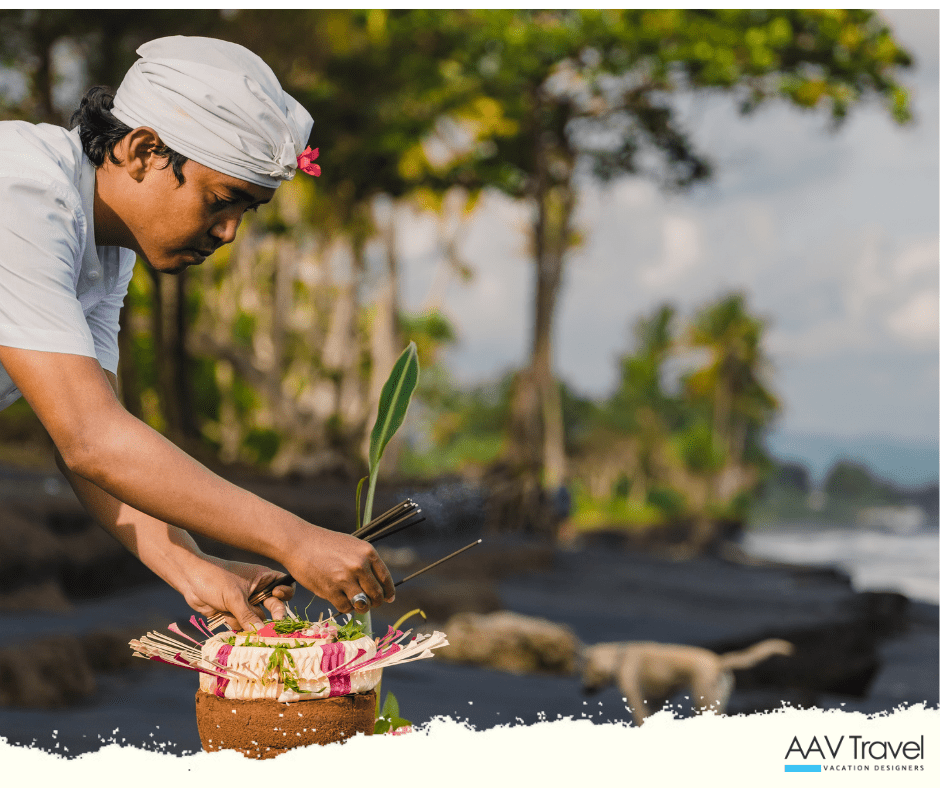
In Bali, the Nyepi celebration falls on the Balinese New Year and brings the entire island to stillness. Ngurah Rai International Airport closes for 24 hours. No cars move. Hotels require guests to remain on their grounds. What stays with travelers who have experienced Nyepi is the sound, or the absence of it. Stand on a balcony in Ubud during those hours and you hear insects, wind, water. Nothing mechanical. Nothing human beyond the occasional voice of a child somewhere below. Millions of people, across every village and city on the island, observing 24 hours of collective silence. The experience of being inside that quiet is available once a year, on a date that most international visitors never think to look up.

These rhythms are easy to overlook because they rarely appear in the sources most travelers use when planning a trip. They exist in the specific knowledge of people who have spent years watching a destination change across its own calendar, who have watched how a place changes across its own calendar. The Douro during harvest. Bali in silence. Tetiaroa during Matari’i i Raro. Each is the same place a traveler might visit at another time of year, and each is a different experience because of when the traveler arrived.

The Pleiades will rise again above Tetiaroa later in the year. The whales will move on. The ceremonies of the cooler months will give way to other traditions. A traveler who visits during Matari’i i Raro will carry something from the experience that belongs only to those particular weeks: a sense of having been present for something quiet and intentional, shaped by a rhythm that predates tourism by centuries.

The most meaningful journeys often have as much to do with when a traveler arrives as with where they go. Timing shapes what a destination reveals, what it holds back, and what it offers to someone who is paying attention. That question, when is this place most itself, is worth asking before any itinerary takes shape.

If the timing of a journey is something you have started thinking about differently, or if you have a destination in mind and want to understand when it is most worth experiencing, that conversation is a useful place to begin. You are welcome to reach out through AAV Travel or contact us directly at info@aav-travel.com.

Written by: Stefanie P.

When every option is good, how do you choose?

You have been thinking about this trip for months. The research is done. The shortlist is strong. Four hotels, each with a genuine claim to being exceptional. Two itineraries that cover different ground but both sound extraordinary. A destination you have wanted to visit for years, and another that keeps surfacing in conversation with people whose taste you trust.

Every option would make for a memorable trip. And yet, instead of feeling ready to book, you feel stuck.

Part of what makes this kind of decision feel so heavy is its actual scale. You are choosing how to spend a week or two of a life that has a limited number of weeks left in it. At 58, you might have 15 or 20 significant international trips ahead of you. Maybe more, maybe fewer. The math is imprecise, but the awareness is real, even when you have never sat down and done the calculation. Every trip you take shapes a finite collection of experiences, and that weight is something reviews and comparison charts do not account for.

The best travel decisions are rarely about identifying the objectively superior option. They are about recognizing which experience aligns most closely with who you are, what matters to you, and where you are in life right now.

Most of us, when faced with a decision like this, do not start there.

Why accomplished people get stuck here

The travelers who feel this paralysis most sharply are often the same people who make complex decisions with confidence everywhere else. They evaluate proposals, assess risk, allocate resources, manage competing priorities across teams and timelines. They are practiced at exercising judgment under pressure.

Travel is one of the places where they stop working.

Professional decisions typically have measurable criteria. Revenue, risk, cost, timeline. The right answer may be debatable, but the framework for evaluating it is shared and understood. Travel decisions have no such framework. The criteria are personal, shifting, and often difficult to put into words: what kind of beauty restores you, what pace your body actually needs right now, whether you want to be surrounded by other people or left alone with a landscape and your own thoughts.

Accomplished travelers tend to respond to this ambiguity the way they respond to ambiguity at work. They research harder. They read more reviews, consult more lists, ask more well-traveled friends. They look for the detail that will break the tie and reveal one option as clearly superior. And the detail never arrives, because the tie is personal, and no amount of additional data will resolve it.


The assumption behind the paralysis

There is a persistent assumption behind most difficult travel decisions: somewhere in the data, the right answer exists. With enough reviews, enough comparisons, enough input from the right people, the obviously correct choice will emerge.

This assumption works often enough in professional life that it can feel universally true. For certain categories of decision, it simply does not apply. Choosing between genuinely excellent options, each of which would produce a different but equally valid experience, is one of those categories. The search for the single perfect answer is itself what creates the paralysis, because no such answer exists in that form. What exists is a range of excellent possibilities, each suited to a different version of who you are right now.

A couple deciding between a yacht itinerary through the Greek islands and a slow driving journey through the Peloponnese is facing a question about priorities. Both are extraordinary. One asks you to settle in and let the details be handled. The other asks you to stay curious and navigate as you go. No comparison will reveal which is “better.” Only clarity about who you are this year, and what you need from these particular days, will do that.

Why clarity comes from priorities

The travelers who get unstuck tend to arrive at the same place: a clearer sense of what this particular trip needs to be. Once that is articulated, the choice often becomes surprisingly straightforward.

If what matters most right now is rest, the slower pace is the obvious answer. If reconnection with a partner is the real priority, the choice that creates the most unstructured time together will outweigh the most impressive option on the list. If stimulation and discovery are what you are after, the more ambitious route makes sense, even knowing you will come home tired.

These conclusions tend to be simple. Arriving at them requires something that more research cannot provide: honest clarity about what you need from this particular stretch of time. And that clarity is harder to reach than it sounds, partly because the question it demands is one most travelers never quite get around to asking.

The question most travelers skip

Most travelers, when weighing their options, think carefully about what they want to experience. The destination, the hotel, the itinerary, the specific moments they hope to collect. Few spend the same energy asking how they want to feel when they come home.

Those two things do not always point in the same direction. You might want to experience the Amalfi Coast, but what you actually need from this trip is to feel unhurried and grounded. On the Amalfi Coast in high season, those two things are often in tension. You can visit a beautiful place and return without the thing you were actually looking for, because no one paused long enough to ask what that was.

What do I actually need this trip to do for me right now? Am I looking for stimulation or rest? Connection or solitude? Do I want to come home inspired, or do I want to come home settled? Travel resists neat criteria because the answers are emotional, seasonal, and tied to a specific moment in life that will not come around again in quite the same way.

Where perspective earns its place

When every option on the table is good, the most useful thing someone can offer is perspective. Knowing what questions to ask. Understanding which tradeoffs will matter to this particular traveler and which ones won’t.

The work is in helping someone see what a particular choice will actually feel like once the anticipation gives way to the experience itself. Sometimes that means recognizing that the most celebrated option on a list is less rewarding than a quieter one that fits the traveler’s actual rhythm. Or understanding that the right time to visit a destination is three weeks later than the traveler planned, because those three weeks change the entire character of the place. This kind of judgment comes from years of watching how decisions play out for different people, in different seasons, at different points in their lives. It is the difference between choosing well and choosing impressively, and it tends to be the thing people value most when they look back.

If you have found yourself weighing travel options that all look appealing and still feeling uncertain about where to commit, that uncertainty is worth paying attention to. It usually signals that the decision needs a different kind of clarity. The challenge is rarely finding another excellent option. Most experienced travelers already have several. The challenge is understanding which one deserves this particular season of your life. You are welcome to reach out through AAV Travel or contact us directly at info@aav-travel.com to start that conversation.

Written by: Stefanie P.

The Best Trips Today May Be the Ones That Leave You Rested

On a long overnight flight, somewhere over the ocean in the small hours, even a seasoned traveler can start to wonder whether the crossing is still part of the pleasure or simply the cost of it. For years, the question never came up. The flight was the price of admission, paid without much thought, and the trip began the moment the wheels left the ground. Lately, for a great many people who have traveled widely and well, that arithmetic has shifted.

The change has nothing to do with a smaller appetite for the world. These are travelers who no longer feel any need to prove themselves through the mechanics of getting somewhere. They have done the overnight flights, the tight connections, and the ambitious itineraries that looked beautiful on paper but required several days to recover from. What they want now is travel that gives more than it takes.

What Luxury Begins to Mean

Early in a traveling life, luxury tends to measure itself in distance and ambition, in how far one has gone and how much was seen. Later, the measure grows quieter and more personal. A room that asks nothing of you in the morning. A view that reveals itself slowly, with no effort on your part. An afternoon with nowhere in particular to be. The plain satisfaction of reaching a place and feeling, almost at once, that it was the right one. Experience has a way of clarifying which parts of travel truly matter and which parts were simply endured.

This is discernment more than retreat, the result of years spent learning what truly rewards the effort. The better question is a simple one. What shape do those ten days leave you in when they are over? Once that becomes the measure, a particular kind of journey starts to make sense.

Four Journeys That Reward a Gentler Pace

Consider the Lowcountry coast of Georgia. Savannah rewards anyone content to wander a few of its squares, sit under the oaks, and let the city arrive over a long lunch. There is real history here and a particular beauty, none of it in any hurry. An easy drive south reaches Sea Island, where the pace slows further still, and a single resort has set the tone for nearly a century. Mornings open onto the Atlantic, afternoons ask for little more than a walk on the sand, and the whole stay unfolds without a time zone to adjust to. For someone who has crossed a great many of them, that absence is its own form of refinement.

Carmel and Big Sur, on the California coast, work on the same principle. Carmel is a town built for lingering, full of small galleries, good food, and a polished calm that never feels staged. The road south into Big Sur is among the most beautiful drives anywhere, and hurrying it defeats the purpose. The catch is that the few genuinely good places to stay along that stretch are small and book many months ahead, which is reason enough to plan it properly. Given a handful of unhurried nights with the Pacific below and nothing on the schedule, the drive itself becomes the point.

For travelers who love big scenery but have tired of the effort of reaching it, the Rocky Mountaineer between Vancouver and Banff is hard to improve on. The whole route runs in daylight, with an overnight hotel stop along the way, so none of the Canadian Rockies passes unseen. You watch it all from a reclining seat under a domed glass roof while someone else handles every detail. No mountain driving, no early scramble to a trailhead, no luggage to move between stops. The landscape does the work, and the traveler simply receives it.

A Great Lakes cruise belongs in the same company. The small ships that sail these waters carry a fraction of the passengers an ocean vessel does, and they call at places with genuine character, from Mackinac Island to the quiet ports of the northern shore. The season is short, roughly May to October, and the late summer light on the water is worth timing a trip around. Days move at the speed of the lake. The scenery stays green and the distances stay humane, and the whole journey sits close to home, with no long crossing and no hard recovery at the end. It is comfort and discovery in equal measure.

The Discipline of Pacing

“A trip does not have to exhaust you to move you.”

What these four journeys share is a sensibility. None of them depends on distance for its appeal. Each values comfort and meaning over the miles covered, and each treats rest as part of the design from the start. And each makes a point that only sharpens with the years. A trip does not have to exhaust you to move you.

Designing travel this way takes a specific kind of attention. It means knowing how a route actually feels day by day, not only how it reads on an itinerary, which accommodations are genuinely restful and which only look the part, and where the natural pauses belong. That is a matter of judgment more than information, and judgment is what accumulates across many years and many trips.

The travelers who get the most from it now tend to be the ones who judge a trip by how well it fits the life they are actually living. That is the wiser measure, and journeys planned that way prove as beautiful and as memorable as anything from the years of going hard and far. The aim is simply to travel well and to come home with something left over.

If you have been thinking about a journey that fits the way you want to travel now, with the pacing and the sense of occasion the moment calls for, a thoughtful conversation is the right place to begin. The most rewarding trips rarely begin with a checklist of attractions. They are designed through careful listening, an honest discussion of pacing and trade offs, and the kind of judgment that comes from years of shaping journeys around what matters most to each traveler. You are warmly invited to reach out through AAV Travel or to write directly to info@aav-travel.com to begin that conversation.

Written by: Stefanie P.

The Greece That Never Needed an Island

Greece has a mainland, and most people who love the country have barely touched it.

That is not a criticism. The islands earn their reputation. But the Peloponnese alone moves through more distinct landscapes than most European countries manage from border to border, and it does so without a single ferry. Within a few hours of driving, the terrain shifts from severe stone peninsula to gentle vine-covered valley to a Venetian harbor city so well-proportioned it seems designed for a different era of travel. These places do not feel related to each other. They do not feel like Greece in the way that phrase is usually meant.

That is, in part, why they are worth the attention.

The Mani: A Landscape on Its Own Terms

The Mani occupies the middle finger of the southern Peloponnese, and its character is unlike anything else in the Mediterranean. Stone tower houses rise from dry hillsides above a coastline that feels genuinely remote, the kind of remote that is not performed for visitors but that exists because the terrain made it so. These towers were built by feuding clans over centuries, and the history is still legible in the architecture. Narrow paths between buildings designed to slow an intruder down. Small churches tucked into ravines, visible from the road only if you know to look.

There are no large resorts here. The region requires narrower roads and longer drives and fewer polished conveniences, and it gives back something that polished convenience tends to push out. A handful of beautifully restored tower houses now take guests, with thick stone walls and views that photographs rarely do justice to. The coastline has small coves with water so clear it appears lit from below, reachable by footpath or by boat. In spring, wildflowers cover the hillsides and the scale of it needs to be felt physically, with the wind and the silence and the long views south toward open water.

The Mani does not go out of its way to make things easy. That is part of what makes it worth planning carefully.

Nemea: A Grape the World Has Barely Heard Of

Roughly two hours from Athens, the Nemea wine region sits in a valley surrounded by low hills in the northeastern Peloponnese. The grape it is built around is Agiorgitiko, a red variety that produces wines ranging from bright and approachable to deeply structured depending on altitude, soil, and the ambitions of the winemaker. Outside Greece, almost no one is paying attention to it yet. Serious collectors in France and Italy are beginning to notice. The window in which a traveler can walk into a family winery in Nemea and taste with the person who made the wine, without a booking platform involved and without a scripted tasting room experience, may not stay open indefinitely.

The producers are mostly small. Tastings tend to be personal. You sit with someone who can account for every decision in what is in your glass, including the ones that did not work out, and that conversation is a different thing from what most wine travel produces.

The region also carries layers of ancient history that do not feel separated from the vineyards. The Temple of Zeus at Nemea, site of the original Nemean Games, sits within the same valley where Agiorgitiko grows today. You are not visiting a ruin and then driving to a winery. You are moving through one landscape where both exist together, the ancient and the agricultural occupying the same hills.

Harvest runs through September and October. The vineyards in autumn, when the leaves turn and the valley goes quiet and golden, are at their best. If the timing works, it is worth arranging a visit around.

Nafplio: Venetian Refinement on a Human Scale

Nafplio may be the most beautiful small city in Greece that most international travelers have never encountered. It sits on the eastern coast of the Peloponnese, built around a natural harbor and watched over by the Palamidi, a massive Venetian fortress on a rocky promontory above the town. The architecture is layered, Venetian, Ottoman, early Greek, the result being a place that feels distinctly Mediterranean without resembling anywhere else in particular.

The city is walkable in a way that larger Greek cities are not. The old town has narrow streets, shaded squares, and the kind of small restaurants that seat twelve people and do not bother with a website. The harbor in the early morning, before the breeze picks up, has a particular quality of light and stillness. The Venetian facades along the waterfront catch a warmth that makes the whole scene feel as though it belongs to a slower century. It lasts about an hour after sunrise. Then the town wakes up and becomes something else entirely.

Nafplio works well as a base. Epidaurus, with its ancient theater and acoustics that still stop people mid-sentence, is a short drive. Mycenae is within easy reach. The advantage of staying rather than passing through is that both sites can be visited early, before the tour buses arrive, and the rest of the day can unfold without a schedule pressing against it.

A Country That Does Not Close for the Season

One of the most persistent assumptions about Greece is that it is a summer destination. The islands reinforce this, many of them shutting down almost entirely between November and April, their infrastructure built around a few intense months followed by long silence.

The mainland runs on different rhythms. Nafplio is pleasant year round, with mild winters and a spring that arrives well before northern Europe thaws. The Mani is at its most walkable in April and May. Nemea’s harvest peaks in October, when the valley has a quality that the height of summer simply does not offer. And winter has its own character. The Peloponnese in December is cool but rarely cold, and the absence of visitors changes the texture of daily life in ways that are hard to describe but easy to feel. Villages that hum in August feel genuinely inhabited. Restaurants serve the people who live there. The rhythms that high season obscures become visible again.

For travelers who know Western Europe well and are looking for somewhere with comparable historical depth but an entirely different feel, the mainland repays attention. The Mani, Nemea, and Nafplio each offer something distinct, and each rewards the kind of traveler who is willing to slow down enough to receive it.

Mainland Greece rewards travelers willing to trade spectacle for texture, pace, and a stronger sense of place. If the Peloponnese has been in the back of your mind, whether for the wine, the history, the landscapes, or simply the appeal of a part of Europe that most travelers walk past on the way to a ferry, a thoughtful conversation about timing and pacing is often the most useful place to begin. Planning here is not complicated, but it is specific, and the details tend to matter more than the broad strokes. You are welcome to reach out through AAV Travel or contact us directly at info@aav-travel.com to start that discussion.

Written by: Stefanie P.