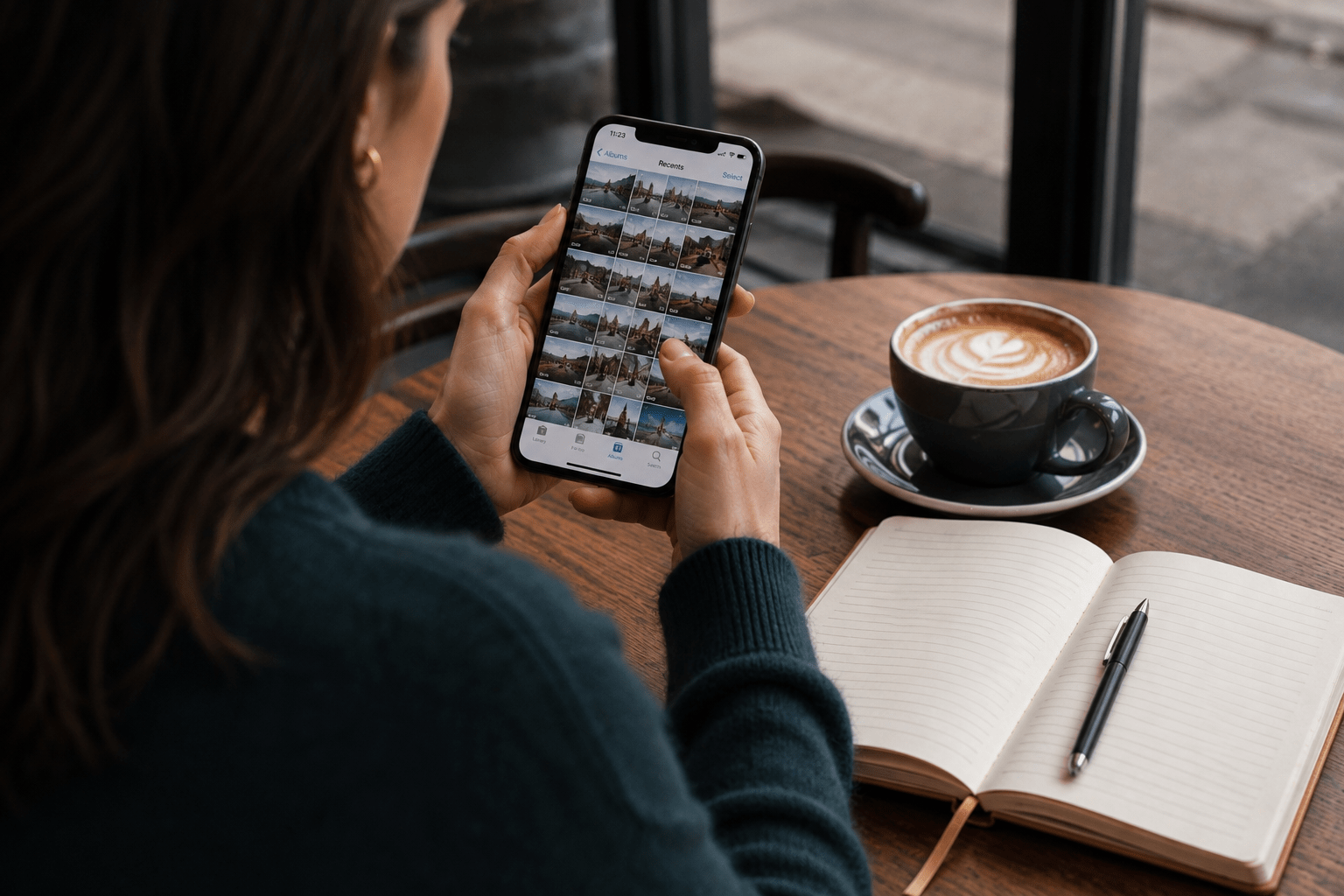
There is a particular moment, usually a few months after a trip, when you open the photo library to show someone a place you loved. You scroll. And you keep scrolling, because somewhere in the two thousand images from that journey is the one that explains it. The harbor at the right hour. The table set for lunch. You find it eventually, and it is a good photograph, and it says almost nothing about why that day mattered.
This is a quiet frustration that experienced travelers know well. We have never documented our journeys more thoroughly, and yet the record we bring home often feels strangely incomplete. The camera did its job. It kept the appearances. What it could not keep was the rest of it, which is to say, most of it.
What the Camera Missed
Think about the moments you actually retell from your favorite trips. Very few of them are visual.
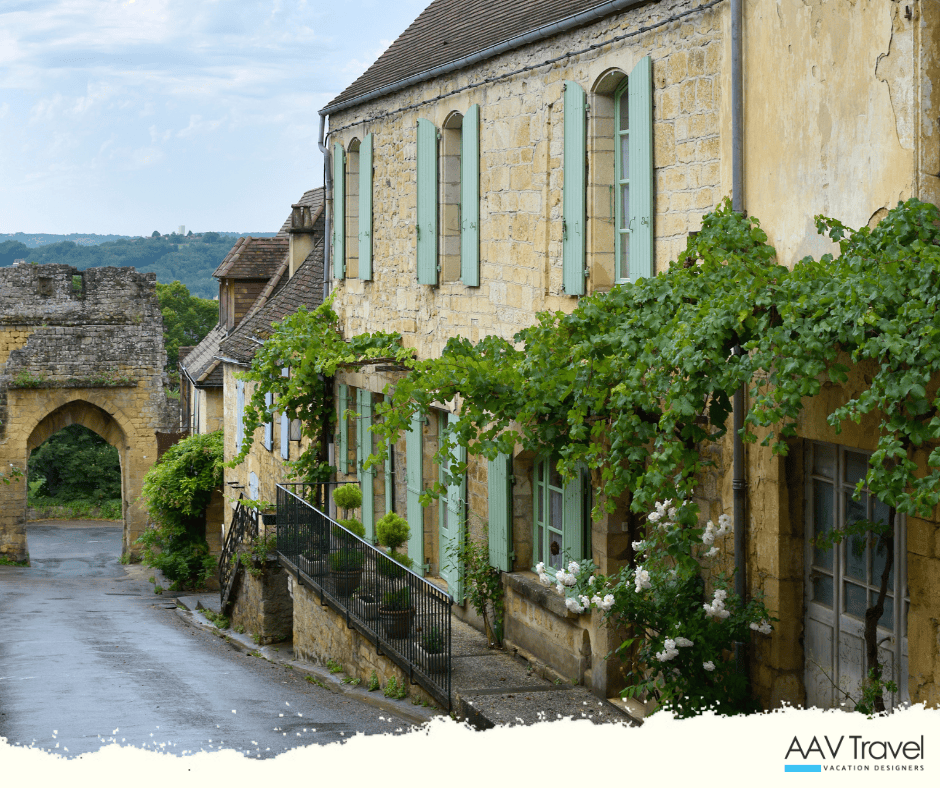
The smell of wet stone in a Périgord village in France after a summer rainstorm. The sound of a village in the South of France at seven in the morning, when the bakery opens before anything else and you can hear it from your window. A conversation with a taxi driver in Dublin that started with directions and ended forty minutes later with his opinions on everything from hurling to his many children. A lunch you nearly skipped, in a place with no sign and no menu, that became the meal you still measure other meals against.
None of those photograph well. Some of them cannot be photographed at all. A camera records light, and much of what makes a journey memorable arrives through the other senses, or through emotion, or through the slow accumulation of small details that only feel significant later. The temperature of the air when you stepped off the train. What you were worried about that week, and how the place gradually took the worry off you.
Ten years on, those are the memories you want back. And they are precisely the ones that fade first, because nothing was done to fix them in place.
Writing as the Second Half of the Record
This is not an argument against photography. Photographs do something writing cannot. They hold exact color, exact faces, the specific way a landscape looked on a specific afternoon. The travelers I work with take beautiful photographs, and they should keep taking them. The argument is for a companion, one that preserves what appearance alone cannot.
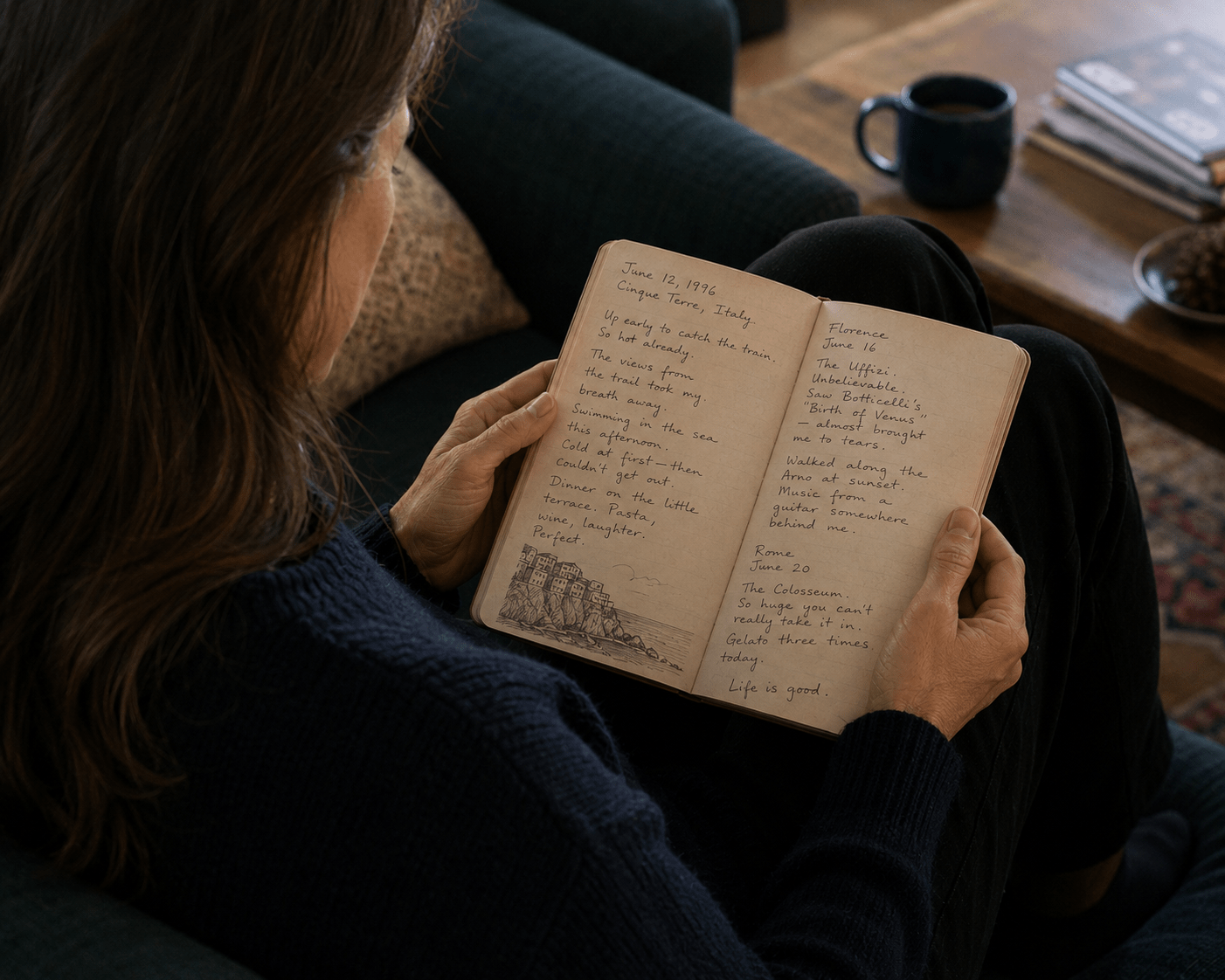
The writing does not need to be good. This surprises people, especially accomplished people who hold their own output to a high standard. A travel journal is a private document with an audience of one, and its value has nothing to do with prose quality. Four sentences at a café table can do the work. What the waiter said. What the light was doing. What you talked about over dinner. What you noticed about yourself that you had not noticed at home. Read those four sentences a decade later and the entire day comes back, in a way that a hundred photographs from the same date somehow do not manage.
I have journals from trips I took more than thirty years ago, and the entries embarrass me slightly, the way old letters do. They also return whole days to me intact. The photographs from those same years have blended into a general impression of places I know I visited. The written pages have not blended into anything. They are still specific.
A Practice of Attention
One reason experienced travelers slow down is that they begin paying attention differently, and journaling both reflects and reinforces that shift. Keeping a journal changes something subtle about the way you move through a place. You begin noticing details that would otherwise pass unnoticed, not because you are searching for something profound, but because you know the day will eventually ask you a simple question: what was worth remembering? Once that question is in the background of your mind, you travel differently.
This is the part of the practice that has almost nothing to do with memory. The photographs and the pages exist for the future. The attention exists for the day itself. You linger in the market instead of walking through it. You ask the vineyard owner one more question. You catch the specific word the fisherman used and hold onto it for an hour, because you can already feel it wanting to be written down.
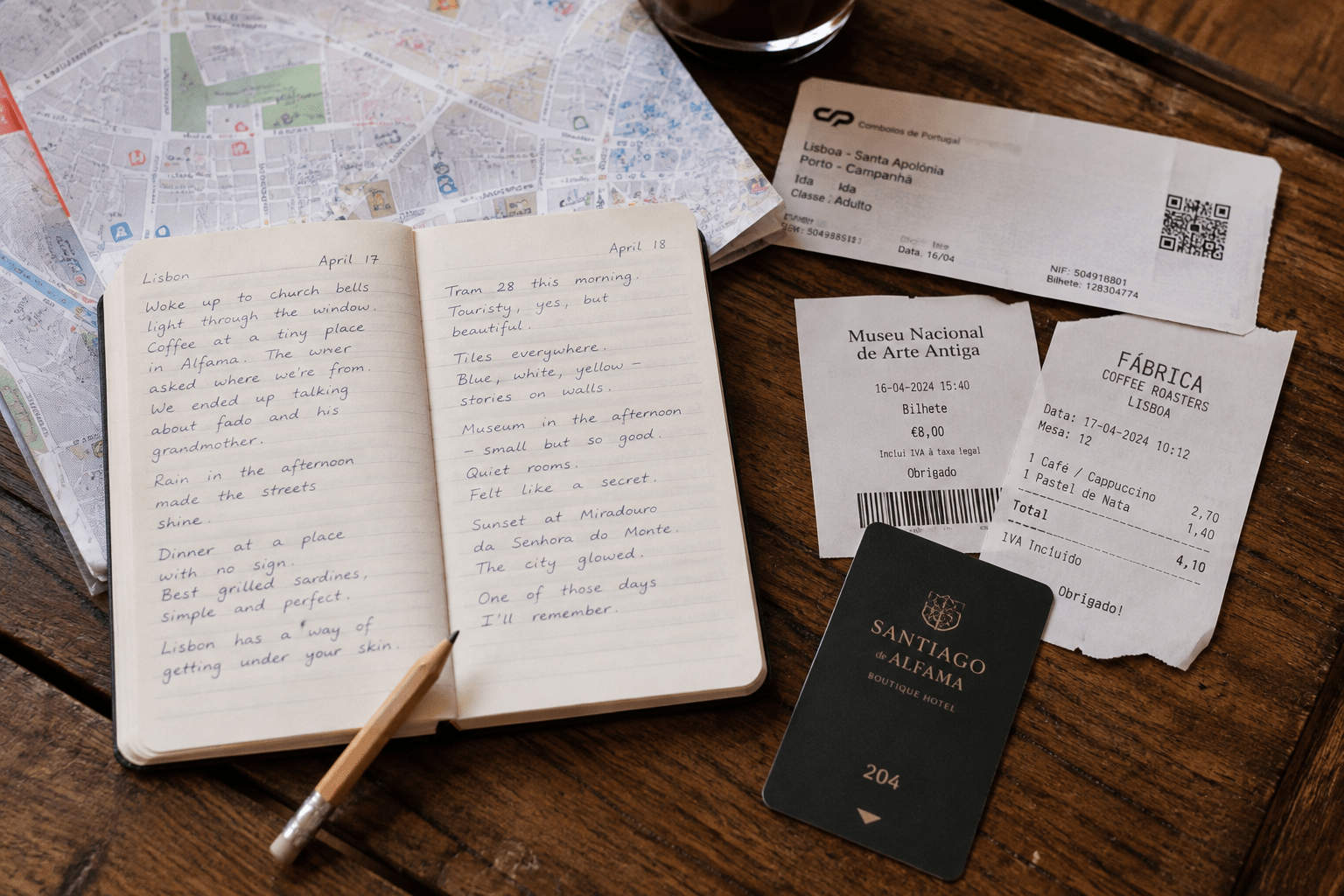
The journal works on the present as much as on memory. The anticipation of writing a few sentences at day’s end quietly rearranges what you notice while it is still happening. A single careful encounter begins to feel more satisfying than rushing toward the next landmark.
This is why the practice pairs so naturally with slower, more deliberate travel. A journey built around three places instead of nine gives you something to observe deeply. Writing rewards texture, and texture requires time.
Keeping the Practice Small
If any of this resonates, resist the urge to turn it into a system. No prompts, no structure, no obligation to write daily. A notebook that fits in a jacket pocket, opened when something seems worth keeping, is the entire method. Some days produce a page. Some days produce a sentence. Some days produce nothing, and that is information too.
The only real discipline worth borrowing from people who do this well is specificity. Write the name of the restaurant, the words the fisherman used, the exact thing your husband said that made you laugh on the ferry. General impressions fade at the same rate whether they are written down or not. Details are what hold.
Years from now, the photographs will show you what Italy looked like.
The journal will remind you who you were when you saw it.
Perhaps this is one of the quieter goals of thoughtful travel planning: creating journeys with enough space to notice these moments in the first place. That idea has shaped the way I design itineraries for years. The pacing, the timing, and the judgment to leave certain hours unscheduled tend to matter more than any single reservation. If you find yourself thinking about travel this way, about what a trip should feel like rather than simply where it should go, you are welcome to reach out through AAV Travel or contact us directly at info@aav-travel.com.
Written by: Stefanie P.