
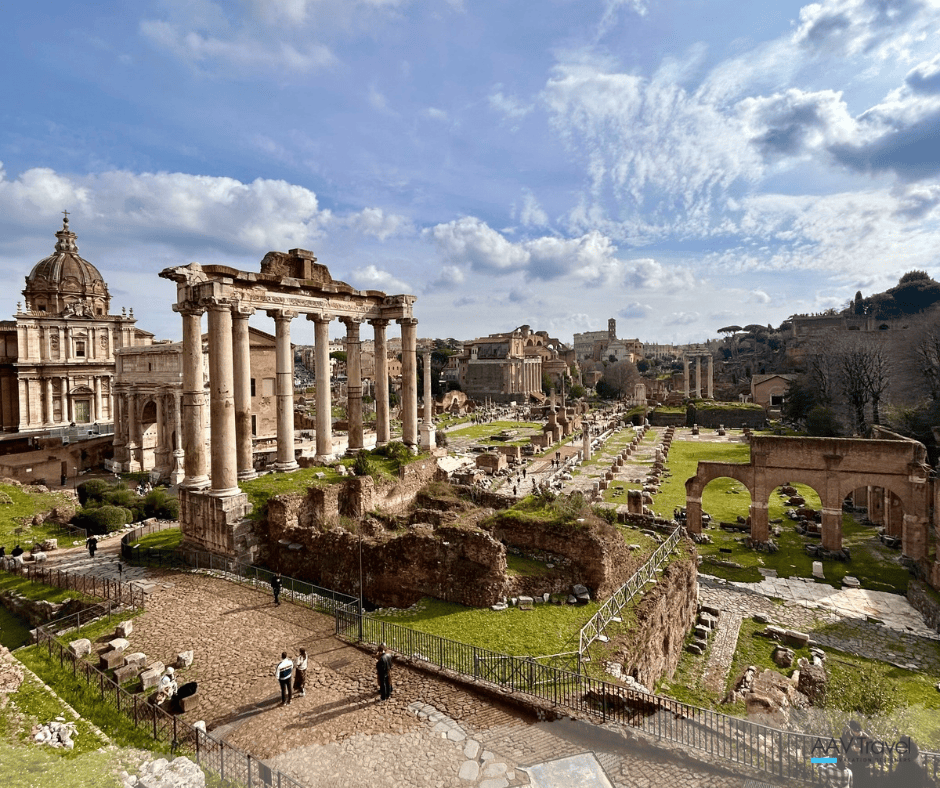
There’s a peculiar contradiction in the way we travel. We dream of wandering Rome’s beautiful piazzas, then choose to do it in July, when the heat is relentless and half the world seems to have had exactly the same idea. Somewhere along the way, Italy in summer became the ideal, reinforced by decades of movie posters and magazine covers.
My first trip to Rome was almost thirty years ago. Five days in May, when I was in my twenties. It was hot, even then, but beautifully so. There was room on the streets, enough that I could stand in a piazza without negotiating for the space. The city felt generous. I have been back many times since, and I have noticed it change. The springs and summers are hotter. The number of visitors has multiplied in a way some sites were never designed for. The experience moved slowly from magical to bearable. Two winters ago, I spent a week in January and did the same again the year after. What surprised me most was how much those winter visits reminded me of the Rome I had fallen in love with decades earlier. I have not seriously thought about going back in summer since.
If I had to pick a morning to spend in Rome for the rest of my life, it would be in late January or early February. A crisp but sunny one, probably. I would be at Piazza del Campidoglio around sunrise, which is late enough in winter to be a civilized hour. 7:30, maybe 7:45. The light coming in low from the east, catching the top of the statues before it reached the pavement. And I would have the place largely to myself.

This is really what winter does to Rome: it changes the light. In summer, the midday sun is high and harsh, flattening the details and bleaching the stone. In January, the light comes in at a lower angle. Walk along Circo Massimo in the early morning and the brick walls of the Baths of Caracalla turn a kind of warm, deep red color for about an hour after sunrise, set against a sky that in winter is often cleaner than it has any right to be. A photographer would call this good light. For the rest of us, it just makes ordinary buildings look like they have been waiting for us to notice them.
The soundtrack is different too. The city is quieter. You can hear the church bells, which have a way of overlapping across the rooftops in a sequence that still catches me after years of visits. And the parrots. They’re there year-round, of course, but in winter I notice them more, chattering among the umbrella pines as the city wakes up.
Then there is the simple fact that Rome is a walking city, and exploring it in 95-degree heat can feel like a form of punishment. In February, you walk and keep walking. You wander into Trastevere at eight in the morning, when the streets are nearly empty and the only reliable sign of life is the smell of bread coming from one of the forni. You pass through parts of the city that in July are so saturated with foot traffic that you cannot really see them.

Winter also changes what you pay attention to. In summer, so much of your time in Rome is spent managing: when to be outside, where to find shade, how to avoid the busiest hours, and how much walking you can comfortably fit into a day. The practical questions crowd out the smaller ones. In winter, those pressures ease, and there is more room to follow whatever catches your eye. A church with the door open. A smell from a bakery you had not planned to enter.
The pleasures of Rome in winter are often found in the simplest moments. A late morning walk through Campo de’ Fiori, the market in full swing, vendors shouting over each other and the smell of citrus in the cold air. A slice of pizza al taglio at Antico Forno Roscioli, standing at the counter because that is how it is done. A climb up the Aventine for the view from the Giardino degli Aranci, with St. Peter’s dome in the distance and cold air coming off the river. A sunset aperitivo on the rooftop of the Singer Palace Hotel, when the terracotta roofs go orange. Small things, and winter leaves you the time to find them.
And while the evenings are cooler, life doesn’t disappear from Rome’s piazzas. In Piazza Testaccio, you can still find families gathering in the early evening, children playing while their parents catch up over a drink. The outdoor side of Rome continues. It just belongs more to the people who live there.

Of course, winter comes with its compromises. The days are short, rain is possible, and you will still encounter crowds at the most famous sites. But I have never felt that a shorter day meant a lesser experience. Quite the opposite. Sometimes it simply means spending a little longer over dinner.
We tend to plan our travels around the images we’ve grown up with. Italy means summer. Paris means spring. New England means autumn. Those associations become so familiar that we rarely question them. But sometimes the most rewarding way to experience a place is to see it in a season we hadn’t considered.
I fell in love with Rome almost thirty years ago. It took me a few decades to discover that I love it even more in winter.
By Stefanie P.