
Why Understanding a Destination’s Rhythm Matters More Than Its Season

On Tetiaroa, a small atoll 33 miles north of Tahiti, there is a moment each year when the Pleiades sink below the horizon and do not return for months. The Tahitians call this period Matari’i i Raro. It is the beginning of the cooler, drier season, and for centuries it has carried a specific cultural weight: a time of scarcity and frugality, when communities slowed down and turned inward before abundance returned.

The atoll quiets during these months. The surrounding water grows calmer. Humpback whales begin arriving from Antarctic waters, traveling north into the warmer shallows around French Polynesia to give birth and nurse their young. On clear nights, with nothing competing, the sky over Tetiaroa is staggering in a way that other seasons, with their cloud cover and humidity, do not quite match. Stargazing belongs to these weeks. So do traditions of oral storytelling and cultural transmission, practices tied to the cooler months when communities turned inward and shared what they carried. The ‘ava ceremony, a ritual with deep roots in Polynesian life that was nearly lost during the missionary period, has been carefully revived and remains part of the seasonal celebrations that mark these transitions.

None of this appears in a climate chart. A traveler researching Tetiaroa for these months would find comfortable temperatures, lower humidity, and less rain. All accurate. All incomplete. The data describes conditions. It says nothing about what the place is actually doing.

Every destination operates on its own calendar, shaped by agriculture, light, migration, spirituality, or tradition. These rhythms determine what a place is doing during any given week, and they can change the character of a visit entirely. Most travelers never encounter them because the usual planning questions, where to go, when the weather is best, how to avoid the crowds, do not surface them. They sit beneath the logistics, invisible until someone who knows the place well enough makes them visible.

The travelers most drawn to Tetiaroa during Matari’i i Raro tend to share something. Their professional lives move fast and leave little room for stillness. Many spend their days moving from one obligation to the next, measuring success through productivity and pace. Even their vacations often carry that same momentum: ambitious itineraries and the instinct to fill every available hour. Part of the appeal of a place like Tetiaroa during these months is that it operates according to a different rhythm altogether. The season invites you to notice more. To sit outside after dinner and watch the Southern Cross move across a sky that has no competition from anything on the ground. To let a conversation with someone from the atoll stretch past its useful point and into something personal. For travelers who have spent decades in motion, that kind of permission can be hard to give themselves. A destination that builds it into its culture makes it easier to accept.

In the Douro Valley of northern Portugal, the grape harvest in September and October changes the region completely. The terraced hillsides that look serene and photographic in June become working landscapes, full of activity and the smell of crushed fruit and the particular energy of a community focused on a single purpose. Producers open their quintas to visitors willing to get close to the process. You sit on a stone terrace at dusk while the day’s picking winds down below, the valley filling with the smell of warm earth, and someone hands you a glass of wine that has not finished becoming itself. The conversation is unhurried. The winemaker’s shoes are still dusty from the vineyard rows. The light over the terraces turns amber and then blue. This is a different thing from the polished tasting room visit available in spring, when the Douro is quiet and beautiful and the vines have not yet begun their work.

Many experienced travelers eventually notice that their most memorable trips share a quality. The weather may not have been ideal. The destination may not have been at its most famous. What made the trip was a feeling of having arrived when the place was doing something true to its own character, something honest and unrehearsed. That feeling is hard to plan for through conventional research, because it depends on knowledge that climate data and crowd calendars do not contain.
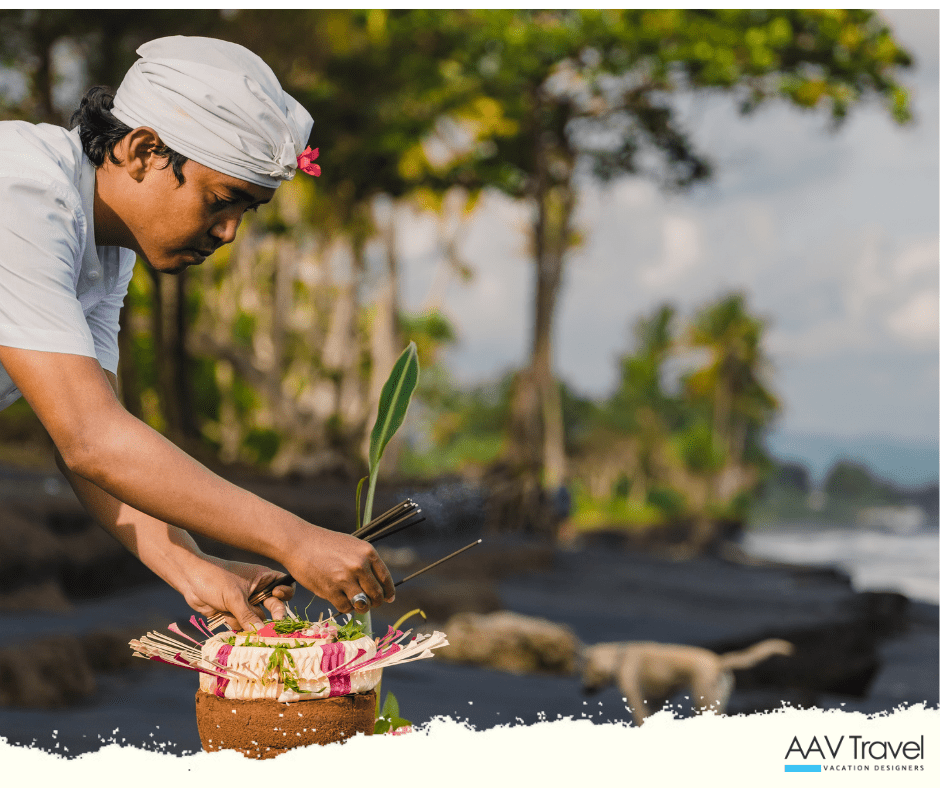
In Bali, the Nyepi celebration falls on the Balinese New Year and brings the entire island to stillness. Ngurah Rai International Airport closes for 24 hours. No cars move. Hotels require guests to remain on their grounds. What stays with travelers who have experienced Nyepi is the sound, or the absence of it. Stand on a balcony in Ubud during those hours and you hear insects, wind, water. Nothing mechanical. Nothing human beyond the occasional voice of a child somewhere below. Millions of people, across every village and city on the island, observing 24 hours of collective silence. The experience of being inside that quiet is available once a year, on a date that most international visitors never think to look up.

These rhythms are easy to overlook because they rarely appear in the sources most travelers use when planning a trip. They exist in the specific knowledge of people who have spent years watching a destination change across its own calendar, who have watched how a place changes across its own calendar. The Douro during harvest. Bali in silence. Tetiaroa during Matari’i i Raro. Each is the same place a traveler might visit at another time of year, and each is a different experience because of when the traveler arrived.

The Pleiades will rise again above Tetiaroa later in the year. The whales will move on. The ceremonies of the cooler months will give way to other traditions. A traveler who visits during Matari’i i Raro will carry something from the experience that belongs only to those particular weeks: a sense of having been present for something quiet and intentional, shaped by a rhythm that predates tourism by centuries.

The most meaningful journeys often have as much to do with when a traveler arrives as with where they go. Timing shapes what a destination reveals, what it holds back, and what it offers to someone who is paying attention. That question, when is this place most itself, is worth asking before any itinerary takes shape.

If the timing of a journey is something you have started thinking about differently, or if you have a destination in mind and want to understand when it is most worth experiencing, that conversation is a useful place to begin. You are welcome to reach out through AAV Travel or contact us directly at info@aav-travel.com.

Written by: Stefanie P.

Information is Abundant. Judgment is Rare.

In an Age of AI and Algorithms, Judgment Matters More than Ever.

The Illusion of Endless Access

We have never had more access to travel information. A single search produces thousands of itineraries, curated lists, hotel reviews, destination guides, restaurant rankings, and sample schedules. Artificial intelligence can generate a ten-day journey in seconds. Television transforms landscapes into cinematic experiences. Social media delivers perfectly framed villages at sunrise and empty piazzas that seem suspended in time.

And yet, many travelers quietly admit to a growing frustration. The place that looked serene feels crowded. The charming café requires a queue. The scenic road is lined with tour buses. The reality does not quite match the promise.

The issue is not a lack of information. It is a lack of discernment.

Algorithms Reward Popularity, Not Fit

Algorithms are designed to amplify what is already gaining attention. The more a destination trends, the more visible it becomes. The more visible it becomes, the more people feel compelled to go. A feedback loop is created, and the result is predictable. Concentration replaces discovery.

But popularity is not the same as suitability.

A couple celebrating a milestone anniversary does not travel in the same way as a family with young children. A retired executive seeking depth and reflection has different pacing needs than a traveler who thrives on constant movement. Health considerations, tolerance for heat, comfort with crowds, appetite for cultural immersion, and risk sensitivity all matter.

An algorithm cannot evaluate these subtleties. It does not ask whether a destination is appropriate in a particular season for a particular traveler. It does not assess infrastructure strain, staffing shortages, political climate, or local sentiment. It cannot distinguish between what photographs beautifully and what feels deeply satisfying in person.

Consider a traveler who plans three days on the Amalfi Coast after watching a documentary filmed in October, with early-morning access and clear roads. She arrives in August, midday, with a full suitcase and no private transfer. The views are exactly as promised. The experience is not.

Judgment begins where data ends.

When Beautiful Content Masks Timing

A television series might film in shoulder season with special access and controlled environments. An influencer captures a coastal village at dawn before day trippers arrive. A traveler arrives in peak season at midday and wonders what went wrong.

Timing is rarely visible in the image.

Seasonality shapes everything. Light, temperature, crowd flow, restaurant availability, guide quality, and even the emotional tone of a place shift throughout the year. A destination that feels expansive in May can feel compressed in August. A cultural site that invites contemplation at opening hours can feel transactional by mid-afternoon.

Experienced travel design requires a layered understanding of these rhythms. It asks not only where to go, but when to go, how long to stay, and how to structure each day so that energy is preserved rather than depleted.

This is not about exclusivity. It is about calibration.

The Myth of the Universal Bucket List

Social media has subtly created the impression that there is a shared list of essential places everyone must experience. Certain coastal towns, certain islands, certain mountain passes, certain iconic monuments appear repeatedly. The message is implied rather than spoken. If you have not been there, you are behind.

But refined travel is not a competition. It is a reflection of who you are at a specific stage of life.

A traveler in her forties balancing professional responsibility and family commitments may crave restoration and privacy. A couple in their sixties may prioritize comfort, seamless logistics, and meaningful cultural exchange. A solo traveler might seek immersion and conversation rather than spectacle.

The question is not whether a destination is famous. The question is whether it aligns with your energy, your curiosity, your physical comfort, and your goals for the journey.

Judgment means recognizing that not every celebrated destination is right for every traveler. It means having the confidence to choose depth over trend and pacing over pressure.

Risk Is Not Always Obvious

Modern travel is marked by layers of complexity that are rarely visible in promotional content. Infrastructure limits, overtourism regulations, staffing shortages, environmental stress, health considerations, transportation disruptions, and geopolitical shifts all influence the quality of an experience.

Artificial intelligence can compile options. It cannot assume responsibility.

An experienced advisor considers contingency planning, flexibility within the itinerary, and the practical realities of moving through a destination. Where are the friction points likely to emerge? What are the alternatives if the weather shifts? How can we build in breathing room so that a delayed transfer does not cascade into stress?

An experienced advisor considers not only the destination itself but the architecture of the journey around it. What does the arrival sequence look like, and where are the friction points most likely to emerge? What happens if a connecting flight is delayed, or a local ferry runs on a reduced schedule during a national holiday? What alternatives exist that can be activated quickly and without panic? These are not worst-case scenarios. They are the ordinary variables of travel, and accounting for them in advance is what separates a resilient journey from a fragile one.

Risk management in travel is not alarmist. It is protective. It allows travelers to remain present because someone else has anticipated the variables.

Pacing Is a Design Choice

One of the most overlooked aspects of modern travel planning is pacing. When information is abundant, there is a tendency to add more. Another town. Another excursion. Another reservation that seems too good to miss.

But more is not always better.

A thoughtfully designed itinerary recognizes the value of space. Time to linger over breakfast. Time to walk without agenda. Time to absorb rather than accumulate. True luxury often lies in what is intentionally left out.

Judgment involves restraint. It requires the discipline to say no to the extra stop that adds logistical strain but little meaning. It requires the confidence to extend a stay in one place rather than racing through three.

In an environment saturated with options, restraint becomes a rare skill.

From Information to Insight

Information answers the question, what is available. Judgment answers the question, what is appropriate.

For experienced travelers, this distinction matters more than ever. The stakes are higher. Time is more precious. Expectations are more nuanced. And the gap between what AI can generate and what a well-calibrated advisor can design has never been wider — precisely because the surface layer of planning has become so easy to automate.

Designing a journey well means filtering the noise, reading the timing, and aligning every decision with the traveler — not with the algorithm. It is less about assembling components and more about shaping an experience that feels coherent, balanced, and protected from unnecessary friction.

If you are beginning to think about a journey and want to move beyond inspiration toward thoughtful design, I invite you to begin with a Strategic Travel Advisory Session. Through a focused and intentional conversation, we explore your goals, pacing preferences, timing considerations, and the broader context that will shape your experience. From there, we determine the right path forward with clarity and discernment.

You can learn more at AAV Travel or reach out directly at info@aav-travel.com to begin the conversation.

Written by: Stefanie P.