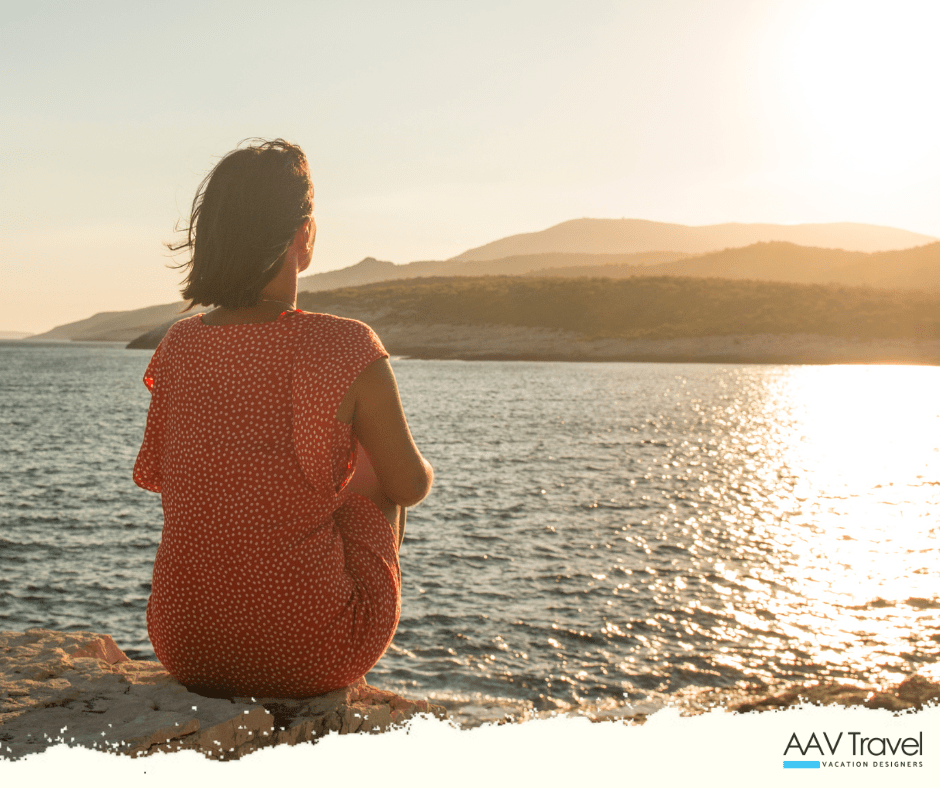
That is not a wellness slogan. It is a structural problem. When the entire framework of how you approach getting older is built around avoidance — avoid certain foods, avoid looking your age, avoid slowing down, avoid the very word — you have organized your life around fear. And fear is a poor architect.
There is a different question worth asking. Not: what do I need to do to prevent aging? But rather: how do I design my life so that I age well?
The distinction is not semantic. One question puts you in a permanent defensive crouch. The other puts you in motion forward, with intention, toward something you are actually building.
The Years You Are Moving Toward
Most people spend their fifties and sixties treating later life as something to be outrun. The wellness industry is largely built on this anxiety, selling the illusion that the right protocol, the right regimen, the right intervention, will hold time at bay long enough to matter. It is an exhausting premise. It is also a dishonest one.
The truth is simpler and far more interesting. You are not running out of time. You are accumulating it. The later decades of a well-designed life, what we think of as the Harvest Years, are not a winding down. They are a culmination. They are where discernment replaces urgency, where clarity replaces obligation, where the things that actually matter have finally had enough time to reveal themselves.
Research continues to challenge the assumption that aging means decline across the board. Judgment sharpens. Priorities clarify. Emotional regulation improves. Many people report greater satisfaction in their sixties and seventies than they felt in the demanding middle decades of their lives. The framing of loss, so common in how we talk about growing older, misses a great deal of what is actually happening.
Designing for Power, Not Protection
If the Harvest Years are worth moving toward — and they are — then the question becomes one of design. How do you build a life, starting now, that makes those years rich?
The answer is not found in restriction. It is found in intention. What you do with your time, where you direct your attention, how you structure your days and your travels and your relationships, these choices compound. They do not produce results in a week. They produce a life, over decades, that either reflects your values or reflects your defaults.
Travel is one of the clearest mirrors for this kind of thinking. The way someone travels in their fifties and sixties says a great deal about how they have begun to relate to time. Travelers who are still moving at the pace they kept at thirty, cramming destinations, filling every hour, measuring the value of a trip by how much ground was covered, are often exhausted by experiences that should have been extraordinary. They are still running the old program.
Travelers who have begun to design their journeys differently arrive somewhere else entirely. Not in geography. In quality of experience.
What Travel Looks Like When You Are Building Toward Something
The shift is rarely dramatic. It often looks like spending ten days in one region rather than five countries in two weeks. It looks like choosing a slower pace not because of physical limitation but because depth has become more interesting than breadth. It looks like traveling with a clear sense of what you are there for — a particular landscape, a culinary tradition, a chapter of history you have been meaning to understand — rather than assembling a list of what you are supposed to see.
It also looks like being honest about trade-offs. A week in coastal Portugal in late September means smaller crowds, softer light, and easier access to the places worth visiting. It also means accepting that the water will be cooler and the days slightly shorter. That is not a compromise. That is a considered decision made by someone who knows what they actually want from a journey.
The same thinking applies to the less obvious choices. Spending four nights in a single hill town in Umbria rather than moving through Rome, Florence, and the Amalfi Coast in eight days is not a lesser version of Italy. For the right traveler, it is a truer one. The morning walk to the same bakery. The afternoon that has no agenda. The dinner that lasts three hours because the conversation is good and no one has an early train. These are not the experiences that appear on highlight reels, but they tend to be the ones people describe years later when they talk about the trip that changed something.
This kind of clarity does not arrive automatically with age. It has to be cultivated. And it tends to develop fastest in people who have started asking the right questions, not what am I trying to avoid, but what am I trying to build?
The Agency You Already Have
There is something quietly radical about deciding that your later years are not a diminishment to be managed but a destination to be designed. It requires rejecting a significant amount of cultural messaging. It requires trusting your own judgment more than the anxiety of the moment. And it requires acting accordingly, in the small choices of daily life and in the larger ones, like how you spend your time when you finally have the freedom to spend it well.
Travel, at its best, is a rehearsal for exactly this. Every well-designed journey requires you to decide what matters, let go of what does not, and trust the expertise of people who know the terrain better than you do. These are not travel skills. They are life skills. And the people who bring them to their journeys tend to return not just rested, but clarified.
The Harvest Years are not something that happens to you. They are something you move toward, with intention, one choice at a time. The only real question is whether you are designing them, or simply arriving unprepared.
IN CLOSING
If you are beginning to think differently about how you travel in this chapter of life, more deliberately, more intentionally, with a clearer sense of what you are building toward, a thoughtful conversation is often the most useful place to start. At AAV Travel, advisory sessions are designed around exactly this kind of thinking: not just where to go, but how to travel in a way that reflects where you are and what you want these years to become. You are welcome to reach out through AAV Travel or contact us directly at info@aav-travel.com.
There is a particular kind of traveler who does not begin with a map. They begin with an obsession. It might be a grape varietal they first tasted on a rainy evening in a restaurant they can no longer name. It might be a fascination with ceramics, or opera, or the history of navigation, or the quiet rituals of tea. Whatever the thread, it is personal, and it is powerful. And when travel is designed around that thread, something shifts. The journey stops being about where you go and starts being about why you go there.
This is what passion-led travel looks like at its best. Not a themed package or a surface-level experience bolted onto an otherwise generic itinerary, but a journey built from the inside out, where the traveler’s deepest curiosity becomes the organizing principle of the entire trip.
Why the Best Journeys Start with a Personal Thread
Most travel planning begins with logistics. Where should we go. When is the best time. Which hotel has the best reviews. These are reasonable questions, but they are also limiting ones. They place the destination at the center and the traveler at the periphery. Passion-led travel reverses that equation. It asks not “what is there to do in Burgundy?” but rather “what would Burgundy reveal to someone who has spent years falling in love with Pinot Noir?”
The distinction matters more than it might seem. A wine lover visiting Burgundy without context will certainly enjoy beautiful landscapes and good tastings. But a wine lover whose journey has been designed around their specific palate, their curiosity about biodynamic farming, their interest in the tension between tradition and innovation in winemaking, will experience the same region at an entirely different depth. They will taste differently because they are tasting with intention. They will notice details that would otherwise blur into scenery.
Wine as a Lens, Not a Destination
Wine travel has become enormously popular, and with that popularity has come a great deal of repetition. The same celebrated estates appear on every curated list. The same tasting room format is replicated across regions. The result is often pleasant but predictable, a series of pours accompanied by scripted explanations that leave the traveler entertained but not truly changed.
For travelers who care deeply about wine, the most rewarding journeys look quite different. They might involve spending an unhurried morning with a winemaker whose family has worked the same hillside for five generations, listening not to a sales pitch but to a philosophy. They might include a walk through the vineyard itself, understanding how soil and microclimate create the flavors that end up in the glass. They might mean visiting during harvest, when the air smells of crushed fruit and the energy of the estate is raw and alive, rather than during the polished calm of the tourist season.
Regions like Piedmont, the Douro Valley, Ribera del Duero, or the quieter corners of Bordeaux all offer this kind of depth, but only when the itinerary is designed to access it. Timing matters enormously. The difference between visiting a wine region in April versus October is not merely aesthetic. It changes the conversations you have, the people you meet, and the understanding you take home. A thoughtful advisor knows these rhythms because they have lived them, and that knowledge shapes not only what is included in a journey but what is deliberately left out.
When Passions Converge
Some of the most extraordinary journeys happen when multiple passions are woven together. A traveler who loves both wine and architecture might find that a week in the Rioja region, where centuries-old bodegas sit alongside buildings designed by Frank Gehry and Zaha Hadid, creates a dialogue between craft and design that neither passion could sustain alone. A couple where one partner is drawn to culinary tradition and the other to maritime history might discover that the Basque Country or coastal Portugal offers both in equal measure, without compromise.
The key is integration, not accumulation. A well-designed passion-led journey does not try to pack in every possible interest. It identifies the thread that will give the trip its emotional coherence and builds outward from there, layering complementary experiences in a way that feels organic rather than forced. This is the difference between a trip that tries to be everything and a trip that feels like it was made for you.
Beyond the Obvious Passions
Wine is among the most recognized entry points for passion-led travel, but the principle extends far beyond it. Travelers have designed remarkable journeys around botanical gardens and rare plant species, around the history of jazz from New Orleans to Paris, around textile traditions from Oaxaca to Marrakech, around sacred architecture from Romanesque chapels to Byzantine monasteries, and around the quiet art of birdwatching in some of the world’s most pristine ecosystems.
What all of these journeys share is a common structure. They begin with something the traveler already loves. They use that love as a compass. And they result in trips that feel not like consumption but like conversation, a dialogue between the traveler and the place that leaves both slightly changed.
The world is extraordinarily generous to travelers who arrive with a genuine question rather than a checklist. A lover of handmade textiles visiting Oaxaca will be welcomed into weaving studios that most tourists walk right past. A birdwatcher in Costa Rica will notice an entirely different forest than the one described in guidebooks. A history enthusiast walking the battlefields of Normandy with real preparation will feel the weight of the landscape in a way that no audio tour can replicate.
The Trade-Offs Worth Making
Passion-led travel also requires honesty about trade-offs. A journey designed around vineyard visits may mean spending less time in cities. A trip built around opera season in Verona means committing to specific dates and potentially navigating summer heat and crowds. These are not problems to be solved. They are decisions to be made with clarity and intention.
The travelers who enjoy passion-led journeys most are often those who understand that choosing deeply in one direction means releasing the pressure to see everything else. That release is, in itself, a form of luxury. It is the freedom to say “this is what matters to me on this trip” and to design every day around that declaration.
Why This Kind of Travel Requires a Different Kind of Planning
Passion-led travel is not something that can be assembled from a list of top-rated experiences. It requires listening, not just to what a traveler wants to do, but to what moves them. It requires understanding context, seasonality, and the often invisible logistics that determine whether a private winery visit feels intimate or awkward, whether a cultural encounter feels revelatory or contrived.
It also requires the kind of relationships that take years to build. Access to a celebrated winemaker’s private cellar is not something that appears on a booking platform. These connections exist within networks built on trust, reputation, and a shared commitment to quality, and they are often the difference between a good trip and an unforgettable one.
If you have been thinking about a journey shaped by something you truly love, whether it is wine, art, music, history, or a passion you have not yet explored through travel, an intentional conversation is often the most meaningful place to begin. The best itineraries are not assembled from recommendations. They are designed through careful listening, honest discussion of pacing and trade-offs, and the kind of judgment that comes from years of experience shaping journeys around what matters most to each traveler. You are welcome to reach out through AAV Travel or contact us directly at info@aav-travel.com to start a thoughtful planning conversation.
There is a certain kind of traveler who has stayed in the finest suites, flown in the most comfortable cabins, and dined at the most celebrated restaurants, yet still returns home feeling oddly tired. Not because the trip was not beautiful. It was. Not because the service was lacking. It was flawless. But because the world followed them there.
Crowds. Noise. Logistics. Visibility. The subtle pressure of being surrounded by other people’s energy and expectations. The constant low hum of unpredictability that can quietly undermine even the most luxurious holiday.
This is where private island resorts enter the conversation, not as a status symbol, but as a different philosophy of travel altogether. They are not simply a more exclusive version of a beach resort. At their best, they are a form of intentional travel design. A place where the experience feels calmer because the environment is controlled, the pace is protected, and the variables that typically create friction are reduced.
In other words, private island resorts are often less about indulgence and more about something far more valuable. They offer the rare luxury of being unreachable.
Privacy is no longer a celebrity concern
It is easy to assume private island travel is only relevant to celebrities or high profile individuals. In reality, privacy has become a growing priority for a much wider group of travelers, including business owners, professionals, families, and couples who simply want the freedom to relax without being observed.
For many experienced travelers, the definition of luxury has shifted. It is no longer about being seen. It is about being left alone.
Privacy today is not always about secrecy. It is about mental space. It is about choosing who you interact with and when. It is about the ability to exhale fully without being pulled back into the social atmosphere of a busy resort.
The irony is that many of the world’s most celebrated luxury destinations have become victims of their own popularity. The hotels are exceptional, but the surrounding energy is louder. The restaurants are world class, but reservations are competitive. The beaches are stunning, but never quite empty.
A private island, by contrast, offers something most travelers do not realize they are craving until they experience it. Containment.
The hidden safety advantages of private island resorts
When travelers think about safety, they often think in broad terms. Political stability. Crime rates. Health advisories. Travel insurance. All important considerations, of course, but the reality is that safety is often built from smaller details.
How you arrive.
Who has access to the property.
How many unfamiliar faces move through the resort each day.
How easily you can retreat into quiet if you feel overwhelmed.
How prepared the staff is for medical situations.
How quickly you can be transferred if something goes wrong.
Private island resorts reduce risk not through fear based marketing, but through design. Many operate as self contained environments with controlled access points, limited arrivals, and a level of guest screening that naturally reduces exposure to unwanted attention.
This is particularly valuable for travelers who prioritize discretion. It is also valuable for families, especially those traveling with teenagers, or those simply wanting a setting where children can roam more freely without constant parental vigilance.
Even for travelers who do not consider themselves anxious, there is something profoundly calming about a destination where the perimeter is defined and the flow of people is intentional.
The best private island resorts do not feel guarded. They feel protected.
Why being unreachable feels so restorative
Most travelers underestimate how much energy is spent navigating the invisible demands of modern travel. Even on vacation, we are often negotiating.
Should we wake early to claim a beach chair.
Should we ask the concierge again about the restaurant reservation.
Should we move away from the loud group by the pool.
Should we try to avoid the wedding party that has taken over the lounge.
Should we walk back to our room because the beach feels too busy.
These are not major problems, but they accumulate. Over time, they chip away at the sense of escape that travelers are trying to achieve.
Private island resorts remove much of this friction. The experience tends to feel quieter and smoother because there are fewer competing agendas in the environment. The resort is not one option among many in a crowded destination. It is the destination.
This is also why private islands are so appealing for milestone travel. Anniversaries, major birthdays, retirement celebrations, or simply the kind of trip that is meant to mark a chapter in life. When the occasion matters, travelers often want to eliminate distractions and maximize presence.
A private island encourages that naturally. You do not have to fight for tranquility. It is built into the setting.
Not all private islands are created equal
It is important to say this clearly. Private island resorts vary dramatically in quality, experience, and the kind of traveler they suit.
Some are romantic and remote, built for couples who want a quiet rhythm and very little outside stimulation. Others feel more social, with a strong sense of community among repeat guests.
Some focus on barefoot elegance and wellness. Others lean toward high adventure, with diving, sailing, and active itineraries.
And then there are islands that market themselves as private but are essentially small resorts with limited charm, complicated logistics, and inconsistent service.
The difference is not always visible in the photos. It often comes down to how thoughtfully the island is run, how the resort manages guest flow, and how well the logistics are handled from the moment you land in the country.
Because the truth about private island travel is this. The remoteness is only luxurious if it is managed correctly.
The real question is not luxury. It is logistics.
Private island travel can be effortless, but it can also be surprisingly complicated. This is where many travelers get caught off guard.
A private island resort might require multiple flight connections, a boat transfer, a small plane flight, or a combination of all three. Weather can affect arrivals. Baggage handling can be more delicate. If you are traveling with medical concerns, mobility limitations, or a tight schedule, the planning must be done with more precision than most travelers expect.
This is why the most successful private island trips are not simply booked. They are designed.
A well planned private island journey considers everything in advance.
The arrival sequence.
The timing of connections.
The backup plan if the weather shifts.
The best room location for privacy.
The best time of year for sea conditions.
The most discreet villa options.
The best activities for the traveler’s energy level.
The best way to structure the days so the experience feels restorative rather than rushed.
In private island travel, small decisions create the difference between a dream trip and a trip that feels like work.
Jumby Bay: a Caribbean escape built on calm exclusivity
Jumby Bay, located off the coast of Antigua, is one of those rare Caribbean properties that delivers what so many resorts promise.
Space. Quiet. Privacy. Ease.
Because the island itself is private, the atmosphere feels naturally contained. Guests are not sharing the shoreline with day trippers or cruise ship crowds. The resort experience is shaped by the fact that everyone on the island is there for the same reason. To slow down.
Jumby Bay is often described as barefoot luxury, but what makes it exceptional is the sense of relaxed control. The resort feels polished without being formal. Elegant without being performative.
For travelers who want privacy without isolation, it is a particularly strong choice. The villas offer an exceptional level of seclusion, while the resort itself still has warmth and sociability for those who want it. It is also a destination where repeat guests are common, which creates an atmosphere that feels quietly established rather than trendy.
Jumby Bay suits travelers who want the Caribbean to feel restorative again, the way it did decades ago, before certain islands became crowded and overly commercialized.
It is also a wonderful option for multigenerational travel, where families want space and comfort without sacrificing quality dining and service.
The Brando: where remoteness becomes an art form
The Brando, located on the private island of Tetiaroa in French Polynesia, is not just a resort. It is an experience built around the concept of deliberate isolation.
This is a property for travelers who are ready to disconnect fully. It is remote, quiet, and designed with an almost cinematic sense of space. The villas are beautifully integrated into the landscape, and privacy feels effortless rather than engineered.
The Brando appeals to travelers who want nature without sacrificing refinement. The environment is deeply calming, and the service is exceptionally discreet. There is also an understated intelligence to the resort’s approach. Sustainability is not presented as a trend. It is embedded into the way the island operates.
But The Brando is also an example of why private island travel must be approached with realism.
Getting there requires careful planning. The transfer experience is part of the journey. Timing matters. The right villa selection matters. The right season matters.
When it is designed properly, the reward is extraordinary. Travelers do not simply relax at The Brando. They disappear. And for many, that is the ultimate luxury.
The trade offs that sophisticated travelers should consider
Private island resorts offer rare advantages, but they are not automatically the right choice for every traveler. In fact, the travelers who enjoy them most are often those who understand the trade offs in advance.
Remoteness can mean fewer dining options beyond the resort.
Weather can influence transfer schedules.
Medical facilities may be limited, depending on the island and the region.
Some travelers feel restless without the ability to explore towns, museums, or local markets.
Others miss the spontaneity of walking into a restaurant or wandering through a lively harbor.
This is why choosing a private island resort is not simply about selecting the most beautiful property. It is about selecting the right type of experience for your personal travel style and your desired pace.
For some travelers, a private island is perfect for five nights, followed by a second destination with more cultural immersion. For others, it is ideal for a full ten day reset. For some, it is best as a couple’s retreat. For others, it becomes the most seamless and relaxing family holiday they have ever taken.
The magic is not in the island itself. The magic is in matching the island to the traveler.
What separates a truly exceptional private island resort from the rest
In my experience, the private island resorts that deliver the most satisfying journeys share a few key qualities.
They have strong operational consistency.
They have a clear identity and do not try to appeal to everyone.
They understand that privacy is a feeling, not a feature.
They design guest flow carefully, so the resort never feels crowded.
They offer discreet but capable safety infrastructure.
They handle arrivals and departures with precision.
They offer villa categories that genuinely support seclusion.
And most importantly, they make the traveler feel calm from the moment the journey begins, not only once they arrive. A private island resort should feel like an exhale. Not a project.
Private island travel is not about escaping the world. It is about escaping friction.
The travelers who love private island resorts are often the ones who have reached a certain point in life. They have worked hard, they are used to responsibility, and they do not want their holiday to involve managing details or navigating unpredictability.
They want an environment that supports rest.
They want space.
They want discretion.
They want to feel safe without thinking about safety.
They want travel that is not only beautiful, but intelligently structured.
This is why private islands have become such a compelling category of luxury travel. They are not simply about exclusivity. They are about control, containment, and calm. And when chosen thoughtfully, they offer something increasingly rare. The ability to truly disappear.
If you are considering a private island escape, the most important step is not choosing the most famous property. It is choosing the right setting, season, and travel rhythm for the kind of experience you actually want. Private island travel can be effortless and restorative when it is designed with care, judgment, and a clear understanding of the logistics behind the beauty. If you would like to explore whether a private island resort is the right fit for your next journey, I invite you to reach out for a thoughtful planning conversation. You can learn more at AAV Travel or contact us directly at info@aav-travel.com
If you’re the kind of traveler who values culture as deeply as coastline, Curaçao often feels like a quiet revelation. This is not a destination built on spectacle or excess. Instead, it unfolds slowly, revealing its character through rhythm, history, and lived-in beauty. Mornings invite you to wander pastel streets shaped by centuries of trade and migration. Afternoons drift toward secluded coves discovered almost accidentally, the sea impossibly clear, the pace unhurried. Curaçao rewards curiosity rather than urgency, offering a sense of place that lingers long after the salt has dried on your skin.
The island’s identity is inseparable from its layered history. Once a strategic hub of the Dutch trading empire, Curaçao remains a constituent country within the Kingdom of the Netherlands. That legacy is visible everywhere, from the gabled façades of Willemstad to the cadence of Papiamentu, a language shaped by Dutch, Portuguese, Spanish, and African roots. Cuisine reflects this same convergence, blending European structure with Caribbean warmth and Latin influence. Positioned just north of Venezuela and safely outside the hurricane belt, Curaçao enjoys a stable climate and year-round appeal, long favored by European travelers seeking winter sun without unpredictability.
Willemstad’s UNESCO-listed harbor remains a focal point, animated by cafés, galleries, and daily life rather than performance. Beyond the city, the island opens into rugged coastlines, salt flats, and hidden beaches best reached by car and curiosity. Curaçao is not about curated perfection; it’s about discovery. That quality, paired with its safety and ease of navigation, makes it particularly appealing to travelers who value independence and thoughtful exploration over tightly packaged experiences.
Luxury here follows a different logic than on many Caribbean islands. Curaçao’s Dutch heritage subtly shapes its hospitality culture, favoring practicality, quality, and restraint over extravagance. Hotels tend to be well-run rather than ostentatious, comfortable rather than theatrical. Boutique properties and small-scale accommodations dominate, while traditional ultra-luxury resorts remain rare. For travelers accustomed to more overt indulgence, this can feel like an adjustment. For others, it’s precisely the appeal.
This understated landscape makes true refinement stand out all the more clearly, which is why Baoase Luxury Resort feels so singular within Curaçao. Tucked discreetly along the coast, Baoase operates on an entirely different frequency. It is not simply one of the island’s best places to stay; it is a destination in its own right, designed for travelers who value privacy, intention, and deeply personal service.
With only a handful of suites and private villas, Baoase feels closer to a private estate than a hotel. The experience is shaped by scale and philosophy rather than grandeur. Guests are known by name, preferences are remembered without being announced, and service unfolds quietly in the background. Design leans toward natural materials and a serene, Balinese-inspired aesthetic, creating an atmosphere that feels grounded, intimate, and restorative rather than performative.
The resort itself was born from a passion project by Dutch owners inspired by Southeast Asian architecture and craftsmanship. That influence is felt throughout the property, from winding garden paths to secluded beach areas and private pools designed for retreat rather than display. Dining is refined and artful, service is attentive without intrusion, and the overall rhythm encourages guests to slow down and remain present.
One of Baoase’s defining characteristics is its firm commitment to privacy. Photography within the property is intentionally restricted, fostering an environment where guests can truly disconnect. This is luxury that exists for the experience itself, not for documentation. It appeals to travelers who value discretion and depth, and who understand that the most meaningful moments are rarely the most visible ones.
When thoughtfully planned, a stay at Baoase pairs beautifully with time spent exploring the island beyond the resort. Curaçao invites movement. Renting a car, tracing the coastline, stopping spontaneously at quiet beaches or local cafés, and engaging with the island on its own terms reveals a warmth and authenticity that feels increasingly rare. The island is welcoming, easygoing, and refreshingly unpretentious, offering a sense of ease that allows travelers to settle in rather than rush through.
Baoase’s story adds to its charm. Founded by Dutch owners who fell in love with both Curaçao and Southeast Asian architecture, the resort was built as a passion project—a place that blended Caribbean beauty with the tranquility and craftsmanship of Bali. The result is a lush, intimate hideaway featuring private pools, secluded beach areas, and winding tropical pathways that encourage guests to slow down and savor the surroundings.
Curaçao is best suited for travelers who appreciate balance: culture alongside coastline, independence alongside comfort, refinement alongside realism. It’s a destination that rewards discernment and pacing, offering depth to those willing to engage with it thoughtfully.
If Curaçao has begun to spark your curiosity, the next step isn’t booking a hotel or choosing dates. It’s having a calm, intentional conversation about how this destination fits into your broader travel goals, your timing, and the experience you truly want to have. That’s where thoughtful travel design begins. You’re welcome to reach out via www.aav-travel.com or info@aav-travel.com when you’re ready to explore what that could look like.
There was a time when luxury travel was measured by abundance. More destinations, more activities, more dining reservations, more stimulation. Today, among experienced travelers who have already seen much of the world, that definition is quietly changing. The most valuable element of travel is no longer excess — it is relief. Relief from noise, from pressure, from constant decision-making, from the subtle tension that follows us even on holiday.
This is where hushpitality enters the conversation, not as a trend to chase, but as a response to how people truly want to feel when they travel.
Hushpitality is not about silence for silence’s sake. It is about designing travel that allows the nervous system to settle. It is about places and experiences that understand the difference between being alone and being at peace, between isolation and intentional quiet. For travelers who are accomplished, curious, and deeply engaged in their lives, this shift feels less like novelty and more like recognition.
Many travelers don’t articulate it this way at first. They say they want something “easy,” “restful,” or “less rushed.” They may say they want nature, or fewer hotel changes, or a villa instead of a city center property. What they are often seeking is not a destination, but a condition — the rare luxury of mental and emotional quiet.
True hushpitality begins long before arrival. It is shaped by decisions that are invisible when done well and immediately felt when done poorly. The choice of location within a destination matters more than the destination itself. A room facing the sea instead of the road. A countryside property twenty minutes farther out that trades convenience for calm. A carefully chosen travel window that avoids the subtle stress of crowds, weather volatility, or local events that change the rhythm of a place.
Silence, in this sense, is curated.
This is where experienced travelers often discover the limits of self-planning. Online inspiration tends to reward stimulation: the must-see, the must-do, the newly opened, the loudly celebrated. But quiet luxury requires discernment. It requires understanding not only what a place offers, but how it feels at different times of day, different seasons, and different stages of life.
Hushpitality also invites a rethinking of pace. It favors fewer transitions and longer stays, allowing the body to adjust and the mind to stop scanning for what comes next. It creates room for mornings without agendas and evenings that don’t require reservations. The absence of structure becomes the structure.
For many travelers, this kind of experience feels unfamiliar at first. There can be a subtle discomfort in slowing down, in realizing how accustomed we have become to noise. But once that threshold is crossed, something shifts. Travelers report sleeping more deeply. Conversations become richer. Small details — light on water, the sound of wind through trees, the rhythm of a local café — take on meaning again.
Importantly, hushpitality does not mean sacrificing comfort, beauty, or cultural depth. In fact, it often heightens them. A thoughtfully chosen museum visit early in the day, before crowds arrive, can feel almost private. A single, meaningful guide encounter can replace a full day of scheduled touring. A well-designed spa experience, or simply time spent walking without purpose, can become the most memorable part of a journey.
Silence sharpens perception.
This approach is particularly resonant for milestone travelers — those marking transitions rather than escapes. Empty nesters redefining freedom. Couples recalibrating after demanding years. Individuals traveling solo not out of necessity, but intention. In these moments, travel becomes less about distraction and more about alignment.
Designing for hushpitality also carries a responsibility. Quiet spaces must be genuinely protected, not merely marketed. Some destinations appear tranquil in photographs but feel restless in reality. Others require careful handling to avoid overexposure, environmental strain, or social friction that disrupts the very calm travelers seek.
This is where thoughtful travel design intersects with private travel risk advisory. Noise is not always audible. It can take the form of logistical friction, poorly timed connections, unreliable services, or cultural misunderstandings that pull travelers out of ease and into vigilance. Seamlessness is not indulgence; it is what allows quiet to exist.
At AAV Travel, hushpitality is not treated as a category, but as a lens. It informs how journeys are shaped, how trade-offs are evaluated, and how success is measured. Sometimes that means advising against a popular property in favor of one with better spatial design. Sometimes it means encouraging clients to stay put rather than move on. Sometimes it means acknowledging that a destination may be right — just not right now.
Silence, after all, is not something you add at the end. It must be designed from the beginning.
As travelers become more discerning, the value of judgment increases. Not every quiet place is restorative. Not every slow itinerary is satisfying. The art lies in understanding who a journey is for, what they carry with them into it, and what they hope to leave behind — even temporarily.
Hushpitality speaks to a deeper evolution in travel. Away from consumption and toward consideration. Away from performance and toward presence. It asks not “How much can I see?” but “How do I want to feel while I am there — and when I return?”
For those ready to travel with greater intention, silence is no longer an absence. It is the experience itself.
If you’re considering a journey where calm, clarity, and thoughtful design matter more than volume or velocity, a quiet conversation is often the best place to begin.
If a quieter, more intentional way of traveling resonates — one shaped by pacing, judgment, and an understanding of what truly restores — an intentional conversation can be a meaningful first step. AAV Travel works with clients to think through the broader picture before plans take shape, aligning destinations, timing, and structure with how travel is meant to feel. You can reach out to us directly at info@aav-travel.com to begin the conversation.