
The Freedom of Knowing You Can’t Do Everything

Most people plan travel as if the supply is unlimited. The assumption is rarely examined and almost never spoken aloud, but it shapes everything. It shapes the overpacked itinerary and the deferred destination. There will always be another trip. Another season. Another chance to reach the place you didn’t get to this time.

For a long stretch of adult life, the assumption is close enough to true that it goes unquestioned. And then, usually without a single event to mark the change, it begins to loosen.

When the question changes

The shift tends to arrive quietly. A traveler who spent their thirties and forties trying to see as much as possible starts to notice a different instinct forming. The itinerary gets shorter before they consciously decide to shorten it. A destination they would have added two years ago gets left off, and the relief of leaving it off is surprising. The question driving the planning has changed, though the traveler may not yet have language for how.

What used to be “how much can I fit into this trip” has become something closer to “what do I actually want from these particular days.”

That is a different question entirely. It produces different answers, different trips, and, for most people who arrive at it honestly, a different relationship with travel.

What the research suggests

Stanford psychologist Laura Carstensen has spent decades studying how people’s priorities shift as their perception of remaining time changes. Her research on time horizons and motivation found something that experienced travelers often sense before they can name it: when people begin to view time as limited, they move toward experiences that carry emotional depth and personal meaning. The pull toward novelty weakens. What intensifies is a desire for experiences that feel genuinely significant, chosen with care.

The traveler who once wanted six countries in three weeks now chooses two weeks in a single region. The scope has narrowed. The clarity has increased.

What selectivity looks like

The changes are often modest. A couple who once built European trips around a country per day begins choosing one region and staying long enough to develop a routine there. Morning coffee at the same café. A walk they take twice because the second time revealed something the first time missed. An afternoon with nothing planned, kept open because the previous afternoon surprised them and they want to leave room for that to happen again.
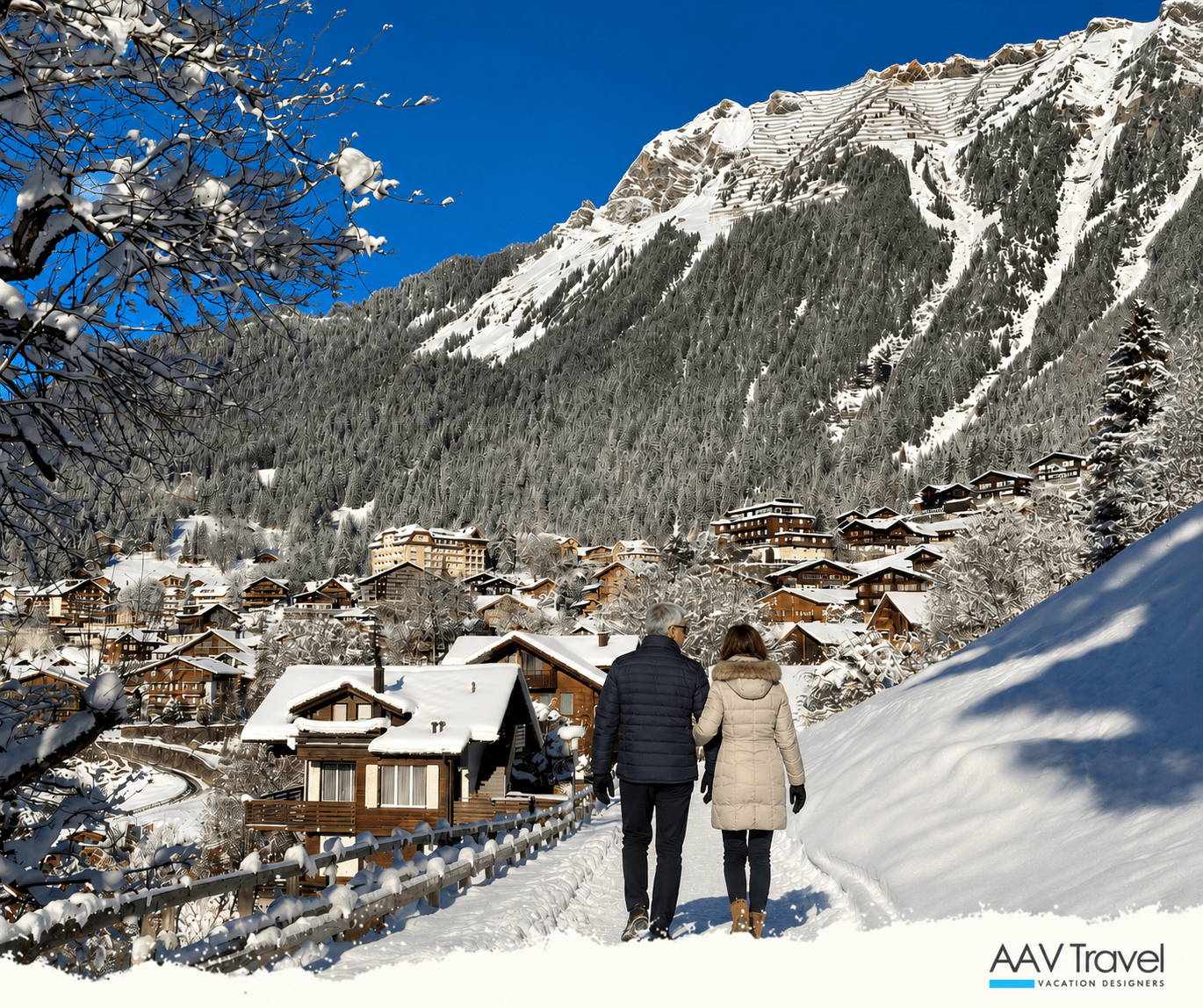
A traveler who has always sought new destinations starts returning to the same village in the Swiss mountains, or the same coastal hotel in Cornwall. The return visit, which once might have felt like a failure of imagination, now feels like an act of precision. They know what the place offers. They know what it asks of them. They go back because the experience deepens each time, the way a good conversation deepens with someone you know well.

Saying no to a good option is a skill that develops late. Younger travelers rarely practice it, because the assumption of unlimited time makes every deferred destination feel temporary. Experienced travelers learn that declining something genuinely appealing often gives the remaining choices their full weight. A two week trip shaped by four commitments feels different from the same two weeks shaped by two. The difference is in how fully each one can be experienced.

The must-see list contracts. Places fall off. Their removal brings a kind of clarity the traveler didn’t expect. What remains is personal, an honest reflection of who the traveler is and what genuinely interests them. The destinations that hold their place tend to be the ones chosen from genuine curiosity, shaped by interests the traveler has carried for years, sometimes decades.

What constraint makes possible

There is something counterintuitive about limitation producing freedom, but experienced travelers recognize the pattern almost immediately. When every destination is available and every itinerary is open, choosing is difficult. The options don’t narrow themselves. The planning process expands to fill whatever time and attention the traveler gives it, and the result is often exhaustion before the trip begins.

When the supply of trips is understood as finite, the question becomes simpler. Which experiences deserve this particular season of my life? The traveler comparing Norway, Japan, Scotland, and New Zealand often finds that asking what this season of life actually calls for brings an unexpected clarity about which one matters most.

The freedom is in the asking. Once you stop assuming that everything can be deferred, the things that genuinely matter come into focus with surprising speed. What you are left with is greater clarity about what matters. And often, the most satisfying travel you’ve had.

A different kind of conversation

Travelers who reach this point often describe a quiet frustration with the way travel is presented to them. More options. More experiences per day. The vocabulary of travel marketing assumes that abundance is the goal, and for a traveler whose priorities have shifted toward selectivity, that vocabulary has stopped being useful.

Most experienced travelers already have enough information about where to go. What they are looking for is perspective on where their time and attention will be best spent. That requires a different kind of conversation, one that begins with honest questions about priorities, pacing, and what a particular trip needs to do for a particular person at this specific point in their life. It sometimes requires someone willing to say that the most celebrated option on the list may not be the right one.

The best travel decisions made later in life tend to share one quality: clarity about why. The traveler knows what the trip is for. The pace reflects what they actually need. And the trip that results, built on that clarity, is often the most satisfying one they’ve taken.
If you’ve begun to notice that the way you think about travel has shifted, that the old approach no longer quite fits, that shift is worth paying attention to. The most useful starting point is often a conversation about what this season of your life actually calls for, before destinations or dates enter the picture. You are welcome to reach out through AAV Travel or contact us directly at info@aav-travel.com to begin that discussion.

Written by: Stefanie P.

Anti-Aging Is Anti-Living. Designing Travel for the Years That Are Worth Getting To.

Anti-aging is anti-living.

That is not a wellness slogan. It is a structural problem. When the entire framework of how you approach getting older is built around avoidance — avoid certain foods, avoid looking your age, avoid slowing down, avoid the very word — you have organized your life around fear. And fear is a poor architect.

There is a different question worth asking. Not: what do I need to do to prevent aging? But rather: how do I design my life so that I age well?

The distinction is not semantic. One question puts you in a permanent defensive crouch. The other puts you in motion forward, with intention, toward something you are actually building.

The Years You Are Moving Toward

Most people spend their fifties and sixties treating later life as something to be outrun. The wellness industry is largely built on this anxiety, selling the illusion that the right protocol, the right regimen, the right intervention, will hold time at bay long enough to matter. It is an exhausting premise. It is also a dishonest one.

The truth is simpler and far more interesting. You are not running out of time. You are accumulating it. The later decades of a well-designed life, what we think of as the Harvest Years, are not a winding down. They are a culmination. They are where discernment replaces urgency, where clarity replaces obligation, where the things that actually matter have finally had enough time to reveal themselves.

Research continues to challenge the assumption that aging means decline across the board. Judgment sharpens. Priorities clarify. Emotional regulation improves. Many people report greater satisfaction in their sixties and seventies than they felt in the demanding middle decades of their lives. The framing of loss, so common in how we talk about growing older, misses a great deal of what is actually happening.

Designing for Power, Not Protection

If the Harvest Years are worth moving toward — and they are — then the question becomes one of design. How do you build a life, starting now, that makes those years rich?

The answer is not found in restriction. It is found in intention. What you do with your time, where you direct your attention, how you structure your days and your travels and your relationships, these choices compound. They do not produce results in a week. They produce a life, over decades, that either reflects your values or reflects your defaults.

Travel is one of the clearest mirrors for this kind of thinking. The way someone travels in their fifties and sixties says a great deal about how they have begun to relate to time. Travelers who are still moving at the pace they kept at thirty, cramming destinations, filling every hour, measuring the value of a trip by how much ground was covered, are often exhausted by experiences that should have been extraordinary. They are still running the old program.

Travelers who have begun to design their journeys differently arrive somewhere else entirely. Not in geography. In quality of experience.

What Travel Looks Like When You Are Building Toward Something

The shift is rarely dramatic. It often looks like spending ten days in one region rather than five countries in two weeks. It looks like choosing a slower pace not because of physical limitation but because depth has become more interesting than breadth. It looks like traveling with a clear sense of what you are there for — a particular landscape, a culinary tradition, a chapter of history you have been meaning to understand — rather than assembling a list of what you are supposed to see.

It also looks like being honest about trade-offs. A week in coastal Portugal in late September means smaller crowds, softer light, and easier access to the places worth visiting. It also means accepting that the water will be cooler and the days slightly shorter. That is not a compromise. That is a considered decision made by someone who knows what they actually want from a journey.

The same thinking applies to the less obvious choices. Spending four nights in a single hill town in Umbria rather than moving through Rome, Florence, and the Amalfi Coast in eight days is not a lesser version of Italy. For the right traveler, it is a truer one. The morning walk to the same bakery. The afternoon that has no agenda. The dinner that lasts three hours because the conversation is good and no one has an early train. These are not the experiences that appear on highlight reels, but they tend to be the ones people describe years later when they talk about the trip that changed something.

This kind of clarity does not arrive automatically with age. It has to be cultivated. And it tends to develop fastest in people who have started asking the right questions, not what am I trying to avoid, but what am I trying to build?

The Agency You Already Have

There is something quietly radical about deciding that your later years are not a diminishment to be managed but a destination to be designed. It requires rejecting a significant amount of cultural messaging. It requires trusting your own judgment more than the anxiety of the moment. And it requires acting accordingly, in the small choices of daily life and in the larger ones, like how you spend your time when you finally have the freedom to spend it well.

Travel, at its best, is a rehearsal for exactly this. Every well-designed journey requires you to decide what matters, let go of what does not, and trust the expertise of people who know the terrain better than you do. These are not travel skills. They are life skills. And the people who bring them to their journeys tend to return not just rested, but clarified.

The Harvest Years are not something that happens to you. They are something you move toward, with intention, one choice at a time. The only real question is whether you are designing them, or simply arriving unprepared.

IN CLOSING

If you are beginning to think differently about how you travel in this chapter of life, more deliberately, more intentionally, with a clearer sense of what you are building toward, a thoughtful conversation is often the most useful place to start. At AAV Travel, advisory sessions are designed around exactly this kind of thinking: not just where to go, but how to travel in a way that reflects where you are and what you want these years to become. You are welcome to reach out through AAV Travel or contact us directly at info@aav-travel.com.

Written by: Stefanie P.